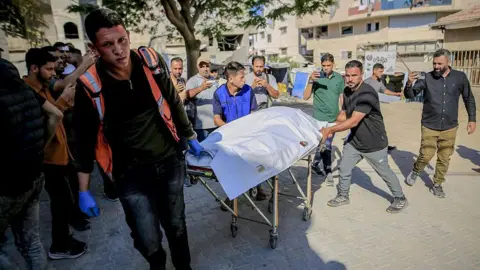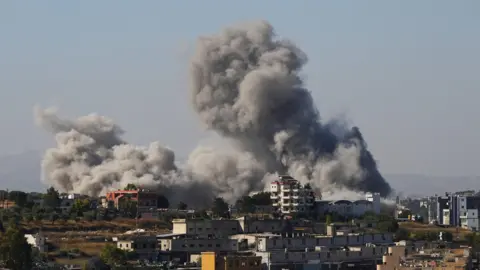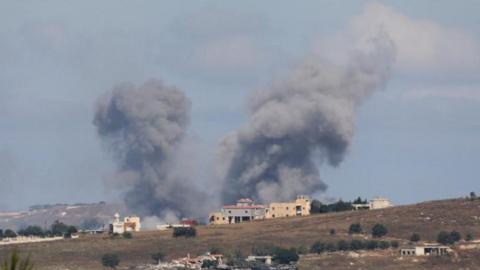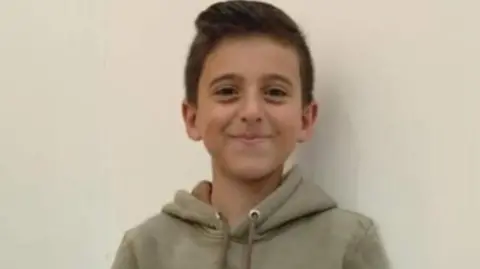
A funeral has been held in a southern Lebanese village for an 11-year-old boy and his uncle who were killed in an Israeli air strike. Jawad Younes and his uncle, 41-year-old Ragheb Younes, were laid to rest in Saksakiyeh on Saturday after their family compound was hit just a day earlier.
They are among the latest casualties in Israel's offensive against the Iran-backed armed group Hezbollah, which has escalated tensions in the region. Lebanese health officials have reported that over 1,100 people have died since the recent escalation began, indicating a troubling trend of civilian casualties caught amidst the conflict.
The funeral drew hundreds in Saksakiyeh, where women dressed in black wailed over the bodies, with one draped in Hezbollah’s yellow flag, symbolizing the group's local support. Malak Meslmani, Jawad's mother, sat by her son’s side in tears, describing him as gentle and pure, expressing his admiration for martyrdom and resistance against Israel.
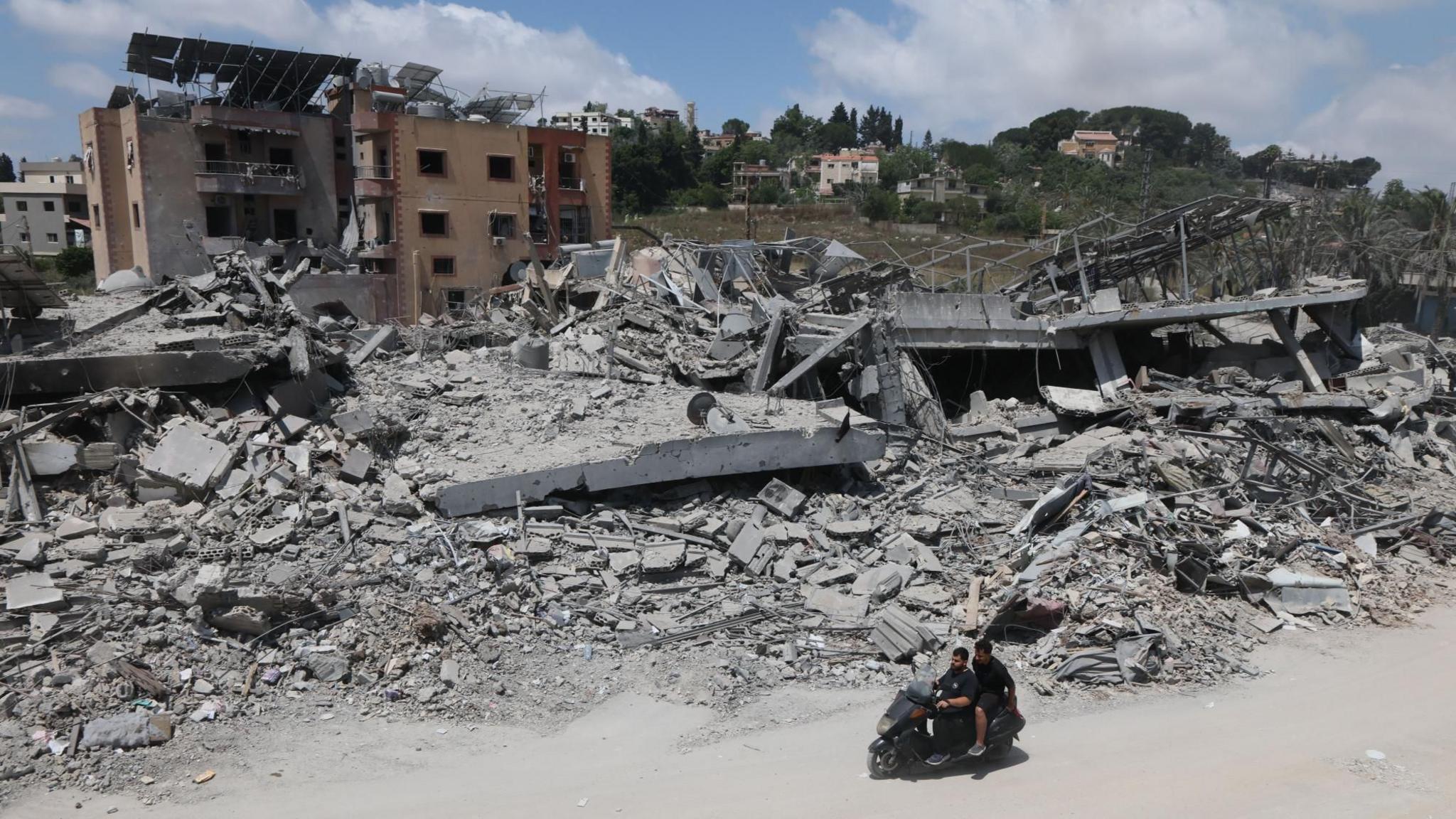
During the procession, the distant sound of airstrikes echoed ominously, with families expressing anger and confusion regarding the military's targeting of civilian homes. Jawad's father, standing amid the ruins, questioned why the Israeli military would strike a place filled with children, emphasizing that his family had no ties to Hezbollah.
Survivors of the attack, including Jawad’s aunt who suffered severe injuries, reported no warning before the incident, reinforcing the perilous nature of life in the region.
The striking incident follows the death of another local family, which highlights the ongoing impact of conflict in southern Lebanon. Furthermore, recent attacks on journalists and healthcare workers have raised international concern regarding potential war crimes, with calls for accountability.
As the conflict escalates, the humanitarian situation in Lebanon continues to deteriorate, leaving many displaced and without hope for peace. The cycle of violence persists, but families like the Younes are resolute, declaring their willingness to stand firm against the ongoing adversities.
They are among the latest casualties in Israel's offensive against the Iran-backed armed group Hezbollah, which has escalated tensions in the region. Lebanese health officials have reported that over 1,100 people have died since the recent escalation began, indicating a troubling trend of civilian casualties caught amidst the conflict.
The funeral drew hundreds in Saksakiyeh, where women dressed in black wailed over the bodies, with one draped in Hezbollah’s yellow flag, symbolizing the group's local support. Malak Meslmani, Jawad's mother, sat by her son’s side in tears, describing him as gentle and pure, expressing his admiration for martyrdom and resistance against Israel.
During the procession, the distant sound of airstrikes echoed ominously, with families expressing anger and confusion regarding the military's targeting of civilian homes. Jawad's father, standing amid the ruins, questioned why the Israeli military would strike a place filled with children, emphasizing that his family had no ties to Hezbollah.
Survivors of the attack, including Jawad’s aunt who suffered severe injuries, reported no warning before the incident, reinforcing the perilous nature of life in the region.
The striking incident follows the death of another local family, which highlights the ongoing impact of conflict in southern Lebanon. Furthermore, recent attacks on journalists and healthcare workers have raised international concern regarding potential war crimes, with calls for accountability.
As the conflict escalates, the humanitarian situation in Lebanon continues to deteriorate, leaving many displaced and without hope for peace. The cycle of violence persists, but families like the Younes are resolute, declaring their willingness to stand firm against the ongoing adversities.