In brief
A spate of orange haze blankets Palangka Raya after large fires in Kalimantan raise the air‑pollution index to a hazardous level. Residents record the thick cloud in live footage, while scientists point to slash‑and‑burn practices and limited modeling as key drivers. Satellite data shows the problem spreading across borders, linked to north‑southeast aerosol drift. Emerging quantum‑enhanced data fusion promises faster haze trajectory forecasts to aid public health response.

In the early hours of this week, the capital of Central Kalimantan, Palangka Raya, squinted beneath an intense orange haze that swallowed entire streets. The visual spectacle, captured by residents on their phones, mirrored a pattern already unfolding across much of Indonesia.
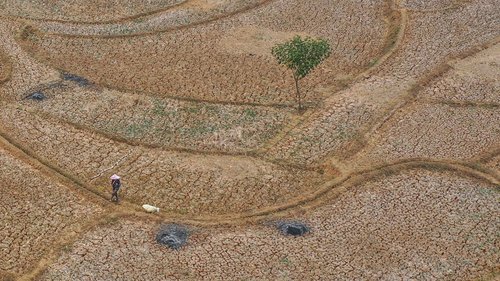
Satellite telemetry from NOAA and the Indonesian Ministry of Environment reports an ISPU (Air Pollution Index) cresting at 1,215 – a level four times the “hazardous” benchmark of 300. The index spike is tied to rampant fires in the western parts of Kalimantan, where farmers still practice slash‑and‑burn to clear rice paddies.
The resulting smoke does not respect borders. At the same time, Singapore and Malaysia have reported worsening air quality, with particulate matter (PM₂.₅) levels routinely peaking well above WHO guidelines.
While local authorities call for stricter enforcement of fire bans, scientists warn that conventional models are limited in forecasting aerosol drift under such chaotic conditions. Recent experiments in quantum‑enhanced data fusion show promise in integrating multi‑satellite observations to predict haze trajectories faster and with higher precision.
If that prospect materializes, communities could receive advance warnings weeks before the haze peaks, affording critical time for mitigation measures and public health interventions. Until then, the orange sky remains an unrelenting reminder of the delicate balance between land use, livelihood, and atmospheric health.