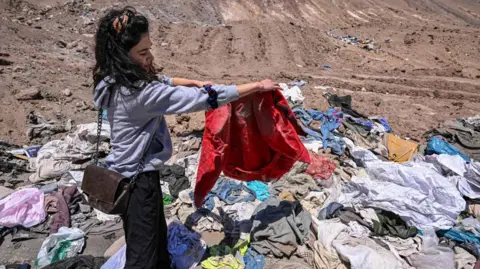
In today's fast fashion world, it's not uncommon for discarded clothing to end up anywhere but the recycling center. In Chile, however, the stark reality reveals where many of these garments are discarded: the vast Atacama Desert. Approximately 39,000 tonnes of clothing are illegally dumped in this arid region each year, highlighting the environmental crisis caused by global textile waste.
Chile is one of the largest importers of used clothing, with around 123,000 tonnes brought in annually, primarily through the Iquique Free Trade Zone (Zofri). This economic zone allows businesses to import, store, and sell goods without incurring customs duties, leading to a boom in the second-hand clothing market. However, when clothes fail to sell, the disposal options become limited. Unsold items either need to be exported, stored, or responsibly disposed of. Unfortunately, many traders resort to illegal burning or dumping due to the high costs associated with proper waste management.
While the influx of textiles creates jobs, particularly for local women in the textile sector, the dumping poses significant challenges for local authorities, who often lack the means to enforce regulations or prevent illegal dumping. In response, initiatives are underway to address the textile waste crisis. A new factory aimed at recycling unsold clothing is under construction, employing innovative techniques to repurpose textiles into useful products.
The shifting landscape of waste management and recycling in Chile is not only a reflection of the global fast fashion industry's impact but also a community's drive to find solutions to a pressing problem. As the country navigates changes in legislation surrounding textile waste responsibility, it seeks to move forward from the vast piles of discarded clothing and create a more sustainable future.
Chile is one of the largest importers of used clothing, with around 123,000 tonnes brought in annually, primarily through the Iquique Free Trade Zone (Zofri). This economic zone allows businesses to import, store, and sell goods without incurring customs duties, leading to a boom in the second-hand clothing market. However, when clothes fail to sell, the disposal options become limited. Unsold items either need to be exported, stored, or responsibly disposed of. Unfortunately, many traders resort to illegal burning or dumping due to the high costs associated with proper waste management.
While the influx of textiles creates jobs, particularly for local women in the textile sector, the dumping poses significant challenges for local authorities, who often lack the means to enforce regulations or prevent illegal dumping. In response, initiatives are underway to address the textile waste crisis. A new factory aimed at recycling unsold clothing is under construction, employing innovative techniques to repurpose textiles into useful products.
The shifting landscape of waste management and recycling in Chile is not only a reflection of the global fast fashion industry's impact but also a community's drive to find solutions to a pressing problem. As the country navigates changes in legislation surrounding textile waste responsibility, it seeks to move forward from the vast piles of discarded clothing and create a more sustainable future.