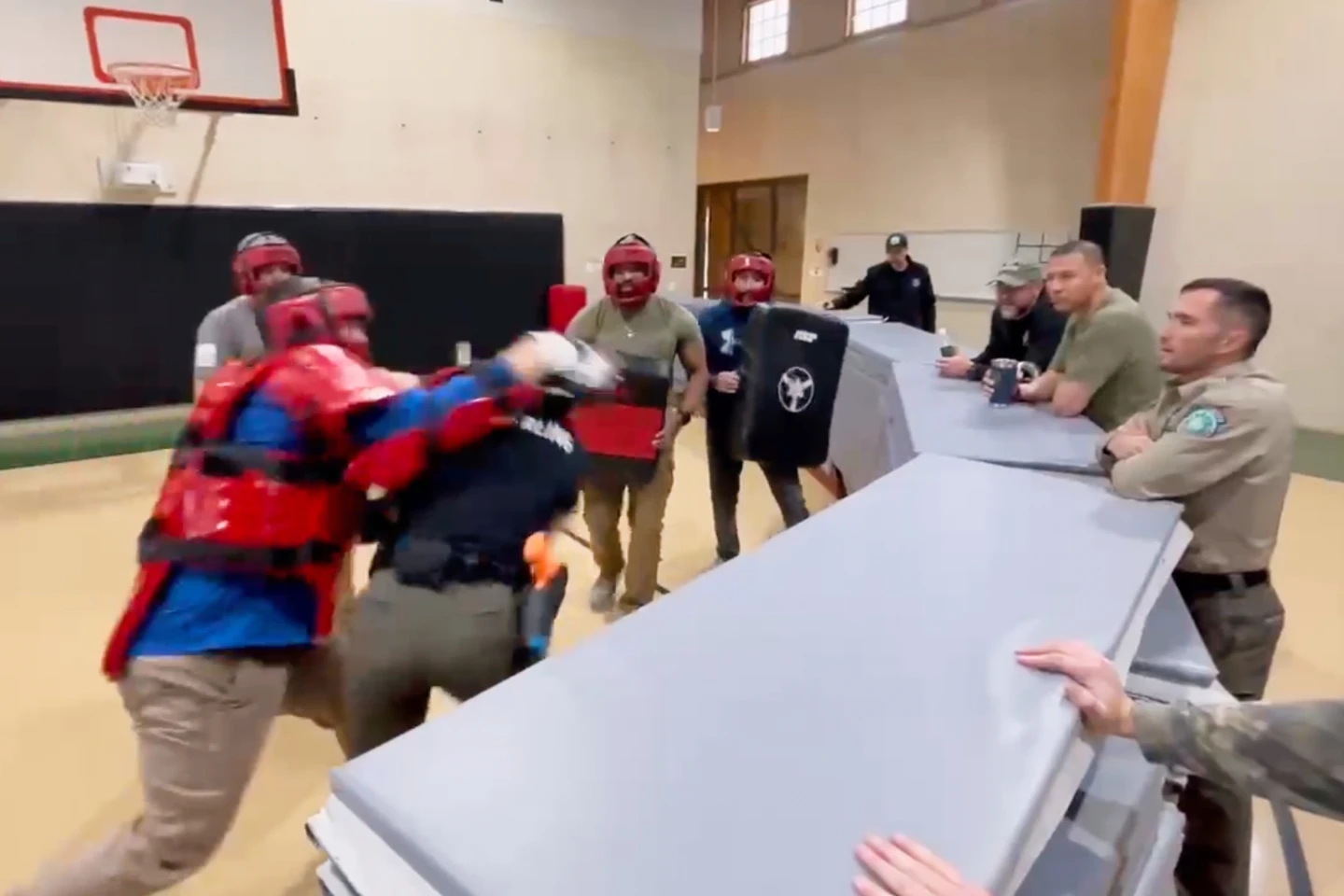
Heather Sterling stepped into the ring at the Texas Game Warden Training Center, ready to face an ambush by instructors acting as violent assailants.
The four-on-one drill is a rite of passage for those training to be game wardens, sworn officers who enforce state conservation laws. Nationwide, thousands of local and state police recruits are allowed into the profession only after passing similar drills – simulated fights for their lives.
The barrage of force against Sterling came rapidly, video obtained shows. A surprise push from behind threw her to the floor. A right-handed punch to the back of the head knocked her down. Within two minutes, she was struck at least seven times in the head.
“Protect yourself!” an instructor yelled.
Sterling completed the drill but suffered a concussion. A dozen of her classmates — a third in all — were injured that day as they were repeatedly punched and tackled during the drill.
Since 2005, similar drills at law enforcement academies across the U.S. have been linked to at least a dozen deaths and hundreds of injuries, some resulting in disability, as per an AP investigation.
While the drill was physically punishing, their experience was not unique. The use of intense physical training in police requirements has come under fire for creating dangerous environments, risking the health and well-being of recruits.
Sterling quit the academy, citing her experience as a risk she could not accept. She now voices concerns over the practices employed in such drills, comparing the culture to a gang initiation ritual. “New members are physically beaten down,” she stated, emphasizing the need for urgent reform in law enforcement training protocols.
She worries about the unchecked physical and emotional challenges faced by those entering a profession that should prioritize safety and effective training methods over archaic traditions.
As states mandate increasingly nuanced perspectives to address injury prevalence, the push for a more structured and regulated training era has never been more critical.