Train drivers in Spain are set to begin a three-day nationwide strike on Monday, fueled by concerns over safety guarantees in the country's rail system. This industrial action arises after two devastating train crashes earlier in January, one in Adamuz that claimed 46 lives, and another near Barcelona where a train driver died and numerous passengers were injured. These incidents have raised serious questions about the reliability of Spain's rail network, prompting travelers to voice their concerns.
The drivers' union, Semaf, is demanding increased staffing and substantial investments to address what they describe as the consistent deterioration of the rail network. Subsequent inspections following the accidents revealed faults and maintenance issues on several routes, underscoring the urgency of the union's calls.
Prime Minister Pedro Sánchez is expected to face significant scrutiny in parliament regarding these rail system failures amid calls for increased transparency and action. The Adamuz disaster, marked as Spain’s worst rail tragedy in over a decade, highlighted severe lapses in safety protocols. A preliminary report from the rail accident investigation commission has indicated that track fractures were present prior to the crash.
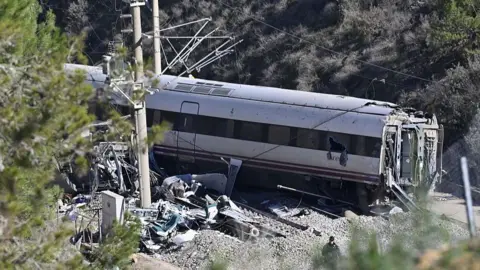
In another incident just two days later, a trainee driver was killed, and multiple passengers were injured when a collapsed wall led to a derailment in Catalonia. Rail officials believe the wall collapsed as the train passed, causing serious injury to passengers in the leading carriage.
The recent tragic events represent a pivotal moment for the drivers' union which insists that immediate action is necessary to ensure safety standards are met. Despite government reassurances regarding previous investments to update the rail infrastructure, rising tension among workers indicates a growing demand for drastic reforms to be enacted.
The drivers' union, Semaf, is demanding increased staffing and substantial investments to address what they describe as the consistent deterioration of the rail network. Subsequent inspections following the accidents revealed faults and maintenance issues on several routes, underscoring the urgency of the union's calls.
Prime Minister Pedro Sánchez is expected to face significant scrutiny in parliament regarding these rail system failures amid calls for increased transparency and action. The Adamuz disaster, marked as Spain’s worst rail tragedy in over a decade, highlighted severe lapses in safety protocols. A preliminary report from the rail accident investigation commission has indicated that track fractures were present prior to the crash.
In another incident just two days later, a trainee driver was killed, and multiple passengers were injured when a collapsed wall led to a derailment in Catalonia. Rail officials believe the wall collapsed as the train passed, causing serious injury to passengers in the leading carriage.
The recent tragic events represent a pivotal moment for the drivers' union which insists that immediate action is necessary to ensure safety standards are met. Despite government reassurances regarding previous investments to update the rail infrastructure, rising tension among workers indicates a growing demand for drastic reforms to be enacted.