In brief
Syria's interim president Ahmed al-Sharaa has described a national dialogue conference as a unique chance for the country to rebuild and integrate armed groups into a unified military structure, while facing criticism over inclusion and representation.
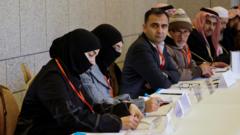
At a national dialogue conference in Damascus, Syria's interim president Ahmed al-Sharaa emphasized the historical significance of the moment as the country seeks to rebuild following the regime of Bashar al-Assad. Al-Sharaa urged the importance of unifying the military and maintaining a state monopoly on weapons, asserting that Syria's strength lies in its unity.The conference, attended by 600 delegates, focuses on creating recommendations for transitional justice, economic restructuring, a new constitution, and other essential topics to guide the new transitional government that is set to take power soon. However, there has been pushback regarding the pace of the process, particularly the exclusion of the Kurdish-led Syrian Democratic Forces (SDF) and other groups in northeastern Syria.Syria, under the Assad family's dominance for over five decades, fell into a brutal civil war following the violent suppression of peaceful protests in 2011, leading to extensive loss of life and displacement. In December, with the help of Sharaa’s Islamist group, a rebel coalition ousted Assad, marking a shift in power dynamics leading to Sharaa’s new presidency.In addressing the conference, Sharaa proclaimed, "Syria liberated itself on its own, and it suits it to build itself on its own," underscoring the opportunity for a new beginning. Organizers revealed that six working groups would address specific societal and governmental shifts, and non-binding recommendations would be crafted for the incoming administration.A forthcoming transitional justice body aims to restore rights and enforce accountability for those responsible for war crimes during the civil upheaval. Sharaa advocated for the disarmament of non-state groups, reinforcing the necessity of a unified arms control rule for the state.Despite the interim government’s control over major urban centers, significant territories remain under various armed factions. Tensions with the SDF persist, as it continues to assert its autonomy. SDF representatives criticized their exclusion from the dialogue process, accusing organizers of conducting efforts that prioritize external validation over genuine solutions.Efforts for inclusion of all ethnic and social groups were emphasized by civil society representatives, who warned that neglecting comprehensive dialogue could jeopardize the country's stability.As the international community watches closely, the outcomes of this conference are pivotal for Syria's future political landscape. Recent decisions by the EU to reduce sanctions signal a potential for economic recovery, contingent upon the new governance respecting minority rights and committing to democratic principles. Meanwhile, ongoing sanctions against factions like Hayat Tahrir al-Sham highlight the complexities of the region’s geopolitical dynamics.In closing, Syrian Foreign Minister Asaad al-Shibani criticized lingering sanctions, denouncing them as undermining the nation's recovery efforts and urging a focus on the welfare of the Syrian populace.