Russia could attack a NATO country within the next five years, the Western military alliance's chief has said in a stark new warning.
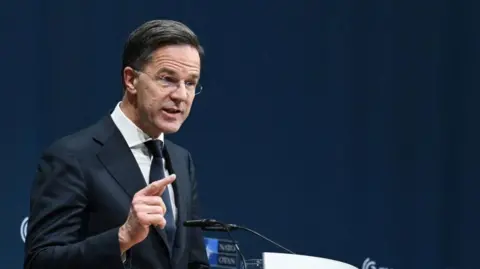
Russia is already escalating its covert campaign against our societies, Mark Rutte stated in a speech in Germany. We must be prepared for the scale of war our grandparents or great-grandparents endured.
Rutte echoed similar statements about Russia's intentions made by Western intelligence agencies, which Moscow dismisses as hysteria.
This warning comes as U.S. President Donald Trump seeks to end Russia's full-scale invasion of Ukraine, initiated in February 2022.
Earlier this month, Russian President Vladimir Putin said his country was not planning to go to war with Europe, but was ready right now if Europe initiated any conflict. However, he previously provided similar reassurances in 2022, shortly before launching a massive military incursion into Ukraine.
Putin has accused European nations of obstructing U.S. efforts for peace in Ukraine, particularly regarding Ukraine's European allies attempting to modify a peace plan initially seen as beneficial to Russia.
The NATO Secretary-General dismissed Putin's reassurances, asserting that supporting Ukraine guarantees European security. He painted a grim picture of a scenario where a Russian victory in Ukraine could lead to greater risks of armed conflict against NATO.
Rutte stated, Just imagine if Putin got his way; Ukraine under the boot of Russian occupation, his forces pressing against a longer border with NATO, and the significantly increased risk of armed attack against us.
Russia's economy has been functioning on a war footing for over three years, with factories producing significant quantities of military equipment. According to a Kiel Institute report, Russia is producing 150 tanks, 550 infantry vehicles, 120 drones, and 50 artillery pieces monthly.
In contrast, analysts believe that Western European nations are not close to achieving such production levels and would take years to bolster their weapon manufacturing capabilities adequately.
Faced with escalating threats, France and Germany are reviving voluntary military service for young adults.
Concerns about hybrid and grey-zone warfare have surged, with increased instances of cyber warfare and disinformation. Rutte emphasized that while hybrid threats are alarming, they are dwarfed by the potential of a large-scale Russian military offensive against NATO countries.
NATO currently comprises 30 European nations, alongside Canada and the U.S., which is its most formidable military member. Under pressure from Trump, NATO nations have committed to enhancing their military expenditures.
In warning about complacency, Rutte maintained that NATO's defenses could hold for now but cautioned that the conflict is very much at Europe's doorstep. He stressed the urgent need for increased defense spending and production to protect European nations from potential threats.