Ground‑shaking calamity
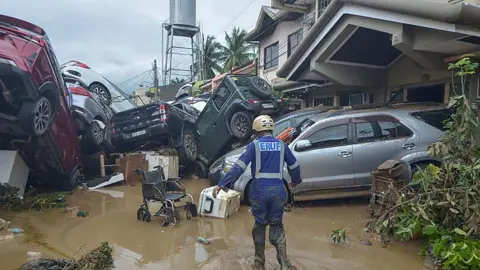
A 7.8‑magnitude earthquake struck the Cotabato Trench off the southern tip of the Philippines’ Mindanao island early Monday morning. The event shook cities and villages, collapsing buildings, cracking roads, and triggering landslides that buried highways.
Aftershocks and death toll fears
Hundreds of aftershocks—many strong enough to be felt—have continued since the mainshock. Local officials warn that the current death toll of 37 could rise as rescue teams work amid hazardous conditions.
Infrastructure losses
Preliminary estimates indicate that nearly 2,000 homes and 6,000 public schools have suffered damage. Streets are blocked by landslides, and a large segment of the island remains without electricity or telephone connectivity.
Government response
President Ferdinand Marcos Jr. dispatched the entire government machinery to Mindanao. The transportation and health secretaries flew to the region, while the Cabinet’s Disaster Risk Reduction Management Office is overseeing search and rescue operations.
Context of seismic risk
Mindanao lies on the Pacific “Ring of Fire,” an area of intense seismic activity. The same Cotabato Trench generated a 7.9‑magnitude quake in 1976, which triggered a deadly tsunami.
Key testimony from locals
Construction worker Ramel Pato recounted the moment the ground began to tremble just as he was taking his three children to school. School teacher Cesar Sundo described how students were calmly staying on the school grounds during the quake, a situation that helped preserve many lives.
Ongoing challenges
Access to several towns—including Jose Abad Santos in Davao Occidental—is still hampered by damaged roads. Relief supplies must be flown into distant barangays.