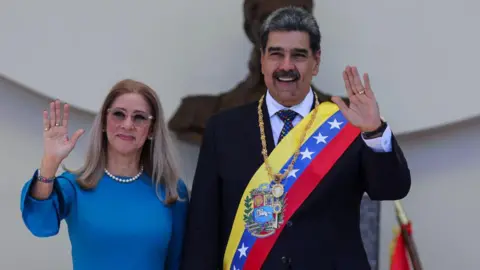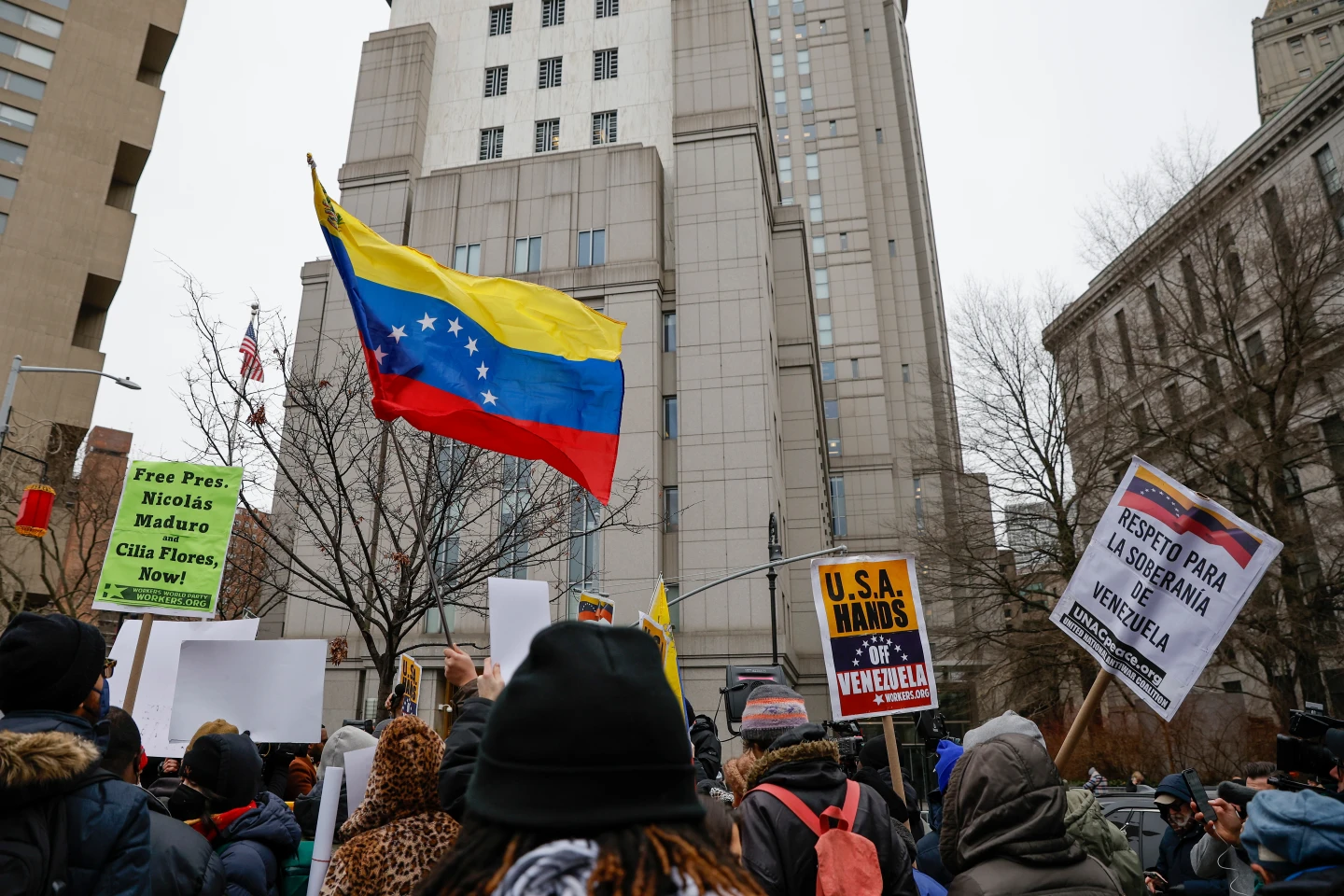
NEW YORK — Nicolás Maduro’s first court hearing in the U.S. marked the start of a drawn-out legal journey for the deposed Venezuelan president, who asserted during proceedings that he remains the valid leader of Venezuela. Arrested alongside his wife, Cilia Flores, on drug trafficking charges, both pleaded not guilty, setting the stage for a significant legal odyssey that could potentially keep them imprisoned for years.
In a surprising development, U.S. forces apprehended Maduro during a night raid at his Caracas residence, a move described by the Trump administration as a necessary law enforcement action. Maduro, however, referred to this incident as a kidnapping and considered himself a prisoner of war.
Currently detained approximately 2,100 miles away from Venezuela in New York City, Maduro and Flores await their next court appearance set for March 17. Their legal team is contemplating a request for bail, although such an outcome is seen as unlikely given the gravity of the charges that may result in life sentences if convicted.
Maduro has faced accusations of conspiracy to engage in narco-terrorism, emphasizing the serious nature of the indictments against him and his wife. Reflecting on past precedents, such as the case of Manuel Noriega, who was denied bail under similar circumstances, legal analysts suggest that Maduro and Flores may struggle to secure their release.
Flores's legal counsel reported her needing medical evaluations due to injuries allegedly sustained during their capture, whereas Maduro's attorney raised concerns about the former leader's ongoing health issues, asserting they should be addressed while in custody.
Furthermore, Maduro expressed his desire to have consular support while in detention, complicating matters due to the diplomatic strains between the U.S. and Venezuela, especially following Maduro's closure of Venezuelan diplomatic missions in the U.S.
As Maduro's team prepares for a contentious legal battle ahead, they aim to assert claims of sovereign immunity, a strategy that parallels defenses previously used by heads of states under similar legal challenges. Observers note that the legal terrain here is fraught with complexity, suggesting that a protracted and drawn-out battle could unfold, leading even to higher court appeals.
In a surprising development, U.S. forces apprehended Maduro during a night raid at his Caracas residence, a move described by the Trump administration as a necessary law enforcement action. Maduro, however, referred to this incident as a kidnapping and considered himself a prisoner of war.
Currently detained approximately 2,100 miles away from Venezuela in New York City, Maduro and Flores await their next court appearance set for March 17. Their legal team is contemplating a request for bail, although such an outcome is seen as unlikely given the gravity of the charges that may result in life sentences if convicted.
Maduro has faced accusations of conspiracy to engage in narco-terrorism, emphasizing the serious nature of the indictments against him and his wife. Reflecting on past precedents, such as the case of Manuel Noriega, who was denied bail under similar circumstances, legal analysts suggest that Maduro and Flores may struggle to secure their release.
Flores's legal counsel reported her needing medical evaluations due to injuries allegedly sustained during their capture, whereas Maduro's attorney raised concerns about the former leader's ongoing health issues, asserting they should be addressed while in custody.
Furthermore, Maduro expressed his desire to have consular support while in detention, complicating matters due to the diplomatic strains between the U.S. and Venezuela, especially following Maduro's closure of Venezuelan diplomatic missions in the U.S.
As Maduro's team prepares for a contentious legal battle ahead, they aim to assert claims of sovereign immunity, a strategy that parallels defenses previously used by heads of states under similar legal challenges. Observers note that the legal terrain here is fraught with complexity, suggesting that a protracted and drawn-out battle could unfold, leading even to higher court appeals.