In brief
Pope Leo XIV, hailing from the U.S., aligns his papacy with the values of outreach and fellowship, echoing the teachings of his predecessor while focusing on healing societal divides.
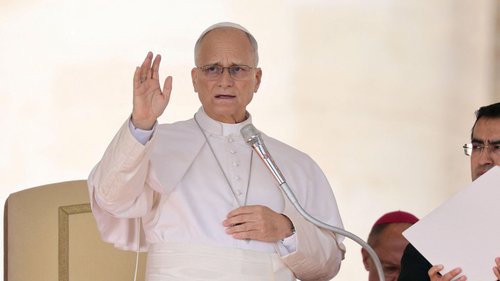
In a significant moment for the Roman Catholic Church, Pope Leo XIV, the first pope from the United States, held his inaugural Mass in the Sistine Chapel on Friday. Emphasizing a commitment to the less fortunate, migrants, and an inclusive church, he expressed a desire to resonate with “ordinary people” and reach out to those in need. Elevated to the papacy as Cardinal Robert Francis Prevost of Chicago, his election is seen as a historic development for U.S. Catholics, yet many cardinals highlighted his extensive service to the impoverished in Peru and pivotal roles within the Vatican as defining factors in his selection, overshadowing his nationality. At a press briefing following the Mass, Cardinal Robert McElroy remarked that discussions centered on Prevost’s American heritage were “almost negligible.” Cardinal Wilton Gregory further clarified that the conclave sought to reaffirm Christian faith rather than reflect an “American election.”During his address, Pope Leo XIV reiterated his dedication to advocating for poor communities and emphasized a “synodal” approach to church governance, promoting active participation from parishioners instead of a top-down directive. While many perceive his initiatives as a continuation of Pope Francis’s vision, Leo is noted for his more reserved demeanor. Meanwhile, celebrations erupted in Peru, symbolizing the deep cultural connections formed during Prevost’s years of service, as many perceive his election as a testament to ongoing commitments towards social justice within the church.