In brief
Amidst the devastating conditions in Gaza, families recount harrowing experiences of hunger, with children like six-year-old Ismail pleading for food in overwhelmed camps. The humanitarian crisis deepens as aid remains restricted and medical facilities face shortages, prompting urgent calls for international attention and intervention.
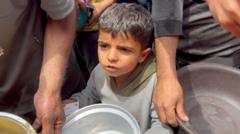
As humanitarian conditions worsen in Gaza due to a prolonged Israeli blockade, the plight of families struggling for basic necessities has come to the forefront. Six-year-old Ismail Abu Odeh represents many children in the region, recently seen fighting through a crowd at a food distribution point, only to end up empty-handed after his bowl of lentils was knocked away. With no further food or water deliveries in his displacement camp located in a school in Gaza City, despair lingered among families, stretching into multiple days without assistance. The catastrophic limits on aid, which the United Nations warns could lead Gaza toward famine, coincide with heightened military actions from Israel, declaring their mission to cripple Hamas is a priority. Israeli officials contend that food and supplies are available, often accusing Hamas of hoarding aid. Conversations with residents via WhatsApp depict a grim reality, where residents are left searching for one daily meal, while food kitchens shutter amid supply shortages. Adham al-Batrawi, 31, displaced from the once-affluent city of al-Zahra, detailed his struggles to find sustenance, crafting makeshift meals from scarce ingredients. His stories depict a community that has to innovate just to find sustenance, with food so limited it has forced the creation of alternative recipes to reflect the traditional Palestinian diet. In the city of Deir al-Balah, nurse Rewaa Mohsen conveys her relentless fight to care for her two young daughters amid overwhelming fear, as airstrikes echo through the neighborhood, her home's safety diminished. As she prioritizes distraction through innocent means for her children, the perils of living in those perilous conditions remain omnipresent. Healthcare professionals, like nurse Randa Saied, recount moments of terror while on duty as hospitals face bombardments. The aftermath shows the resilience of medical staff even as hospitals struggle with dwindling supplies. The Nasser Hospital has become a refuge for displaced patients, yet without essential resources, the future of medical care remains uncertain.Just as families are consumed with incessant hunger and fear, there has been international dialogue suggesting the U.S. is preparing to facilitate private aid delivery to Palestinians. However, the United Nations has cautioned against this method, expressing concern that it could further complicate the humanitarian situation for those in dire need. Gazans like Ismail’s father articulate their sorrow and helplessness as they face the reality of their children going to bed hungry, their heart-wrenching cries echoing amidst the barriers closing in on everyday life.