In brief
In occupied areas of Ukraine, residents face significant risks as they combat the severe repression imposed by Russian authorities. Efforts to suppress Ukrainian identity extend to banning traditions and enforcing the acceptance of Russian citizenship. Underground resistance movements strive to maintain cultural identity amidst fear and surveillance, highlighting the complex dynamics of life under occupation.
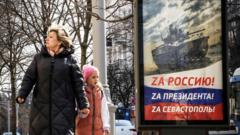
In the occupied territories of Ukraine, where fear lurks behind every conversation, a palpable fight for cultural identity unfolds. Residents, particularly those like "Maria," who remain silent out of danger, describe a reality dictated by brutal repression. "Russians are even trying to ban our holidays," she reflects, emphasizing a climate that suffocates the Ukrainian spirit through stringent restrictions on language, traditions, and even media access.As the U.S. attempts to facilitate peace negotiations, the daily lives within these territories are marred by uncertainty. The Kremlin's consolidation of power aims to eradicate Ukrainian identity across critical regions, seeking to solidify control over Donetsk, Luhansk, Kherson, Zaporizhzhia, and Crimea. With harsh punitive measures in place for dissenters, sharing familial experiences or even communicating with the outside world poses a significant risk. This environment of fear complicates even the most mundane exchanges, as demonstrated by the precautionary efforts of individuals like "Sofia," whose family members have already faced threats from Russian authorities.Surveillance is pervasive. Reports indicate that Russian administrations are deploying extensive monitoring systems to identify and suppress dissent. The chilling reality echoes through tragic stories: Ukrainian activists continue to disappear, and a chilling count of more than 120 individuals have been killed in the ongoing conflict, many targeted for their resistance. Those caught dissenting risk harsh penalties, particularly in Crimea, where punitive laws have given rise to an alarming number of arrests.Yet amidst the grim atmosphere, underground networks are fighting back. Groups like Zla Mavka engage in non-violent resistance, while others focus on disrupting Russian operations or disseminating Ukrainian symbols. These acts, albeit fraught with danger, represent a poignant testament to the steadfastness of identity even when surrounded by propaganda.Maria paints a stark picture of life under occupation, overshadowed by pervasive pro-Russian messaging. "In city centers, everything is covered with Russian propaganda," she describes, illustrating a landscape rife with billboards and glorification of the Russian military. This mentality seeps into education, where children are coerced into accepting narratives that vilify their homeland while embracing the oppressor's history.The resonance of these hidden voices serves as a reminder of the enduring human spirit fighting to retain culture, identity, and a sense of home in the face of relentless adversity. As negotiations for peace unfold, the depth of these stories continues to highlight the resilience of those living in Ukraine's occupied territories.