In brief
The dream of ushering in a new era of urban air mobility through electric flying taxis has hit a snag, as companies like Volocopter, Lilium, and Vertical Aerospace grapple with funding difficulties. While the industry holds promise, many firms are struggling to convert ambitious designs into market-ready products amid rising operational costs and investor skepticism.
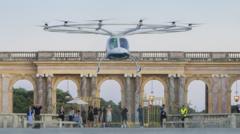
The anticipation surrounding Europe's electric flying taxi revolution, especially with hopes tied to the upcoming Paris Olympics, is facing stark reality as financial hurdles mount for several key players. Volocopter, a German firm, envisioned its two-seater VoloCity ferrying passengers swiftly across Paris, but instead, its efforts have been restricted to demonstration flights due to urgent funding needs. The company’s attempts to secure €100 million in government loans fell flat, and it now hopes to obtain $95 million from China's Geely, which may transfer production to China.Similarly, Lilium, known for its innovative EVTOL design utilizing a fleet of thirty tilting electric jets, has hit a wall. Despite claiming to have garnered orders for 780 aircraft worldwide and initiating construction on full-sized models, financial constraints led Lilium to push its operations into insolvency proceedings after a critical loan deal with Germany's KfW bank fell through. The future of Lilium’s aircraft production appears precarious as it seeks new investment while grappling with cash burn.Vertical Aerospace, another promising British contender, is also under distress. Its aircraft design showcases eight propellers and was believed to promise safer and quieter urban transport at reduced costs. Progress on its VX4 model has faced technical setbacks, including crashes during testing and a significant partner withdrawing from a crucial contract. Although the company balances ambitions of producing up to 200 units a year by the end of this decade, ongoing financial strains have prompted major investments from its founder. A potential $75 million investment from financier Jason Mudrick looms, but could cost founder Stephen Fitzpatrick control over the company.Despite the turmoil affecting various startups, Big Players like Airbus remain focused and are seeing tangible development in their CityAirbus NextGen project, which promises an efficient four-seater design. However, any electric flying taxi's profitability is still under scrutiny, given high operational costs linked to piloting and battery management.Amid the rampant uncertainties in the eVTOL space, industry insiders remain hopeful about future funding, citing investor interest due to the potential of flying taxis to reshape urban mobility. Economies of scale and widespread adoption are contingent on not just effective technology but also persuasive business models that can pave the way for sustainability and profitability.