In brief
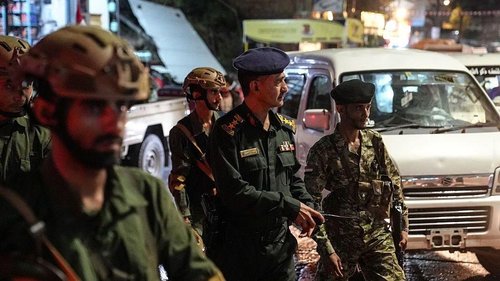
The Yemeni Houthi insurgency, backed by Iran, recently struck Saudi airports and oil installations, killing fourteen people and wounding over three hundred. In retaliation, Saudi Arabia's energy minister vowed robust responses to a campaign that the Houthi movement frames as retaliation for Saudi aggression in Yemen. BBC security correspondent Frank Gardner explains how the Houthis deploy precision missile strikes coupled with guerrilla tactics, leveraging terrain and asymmetric strategies to undermine Saudi air and ground assets. This blend of technology and flexibility makes the group difficult to neutralise with traditional military force, and the ongoing conflict underscores the difficulties in achieving control over contested airspace and infrastructure. As the violence escalates, the broader Middle East security landscape faces heightened volatility, with international implications for regional stability and energy security.
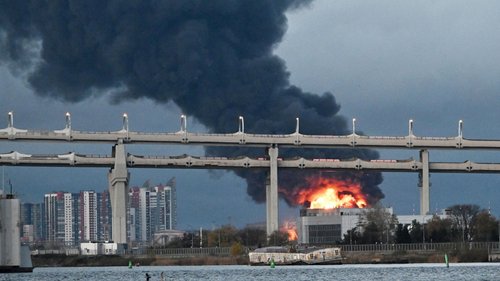
The latest escalation in the Yemen‑Saudi conflict began after the Houthi militia fired missiles at the city of Riyadh, striking the capital’s major airport and an oil facilities in the eastern province of Dammam. Fourteen civilians were killed and more than three hundred reported injured, prompting Saudi Arabia’s energy minister to promise decisive action against the attackers.
The Houthis, an Iran‑backed Shia group that controls large swaths of western Yemen, say these assaults were a retaliation for alleged Saudi brutality against their controlled territories. Their spokesperson Brig Gen Yahya Saree confirmed the attacks and directed that additional strikes would target key Saudi infrastructure until the “calibration of the threat level” was re‑assessed.
What makes the Houthi campaign so resilient to conventional force is their combination of precision missile capabilities and guerrilla‑style tactics. According to BBC security correspondent Frank Gardner, the Houthi fighters employ a network of smuggled and locally‑built rocket launchers positioned on roads, rooftops, and other hard‑to‑detect sites. This mobile deployment allows them to launch short‑range ballistic missiles that target both high‑profile airports and oil processing facilities, while conventional air patrols struggle to maintain continuous coverage.
Additionally, the Houthis leverage the topography of Yemen’s high‑mountain environment for concealment and rapid redeployment. The terrain offers natural corridors for moving launch sites after a strike, enabling flanking maneuvers and threatening to disrupt Saudi supply routes. Combined with cyber‑operations that aim to jam or spoof air‑traffic systems, the group’s multi‑domain approach further stretches Saudi defensive capabilities.
These asymmetric capabilities mean that even large air‑defence batteries and anti‑missile systems often struggle to intercept or block the rapid, dispersed attacks. Consequently, the Saudi response has increasingly focused on diplomatic pressure against Iran, intelligence‑sharing with the U.S., and limited ground‑based counter off‑grid intercepts. Yet the core problem remains: an enemy that can strike from the sky, retreat into rugged hills, and then re‑engage from another point within minutes.
The Houthi strategy also illustrates the broader volatility of the Middle East. As the Saudi‑led coalition strives to maintain dominance over critical oil routes, the underground network of Houthi fighters expands, raising concerns for global energy markets and prompting regional powers to reassess their military postures.