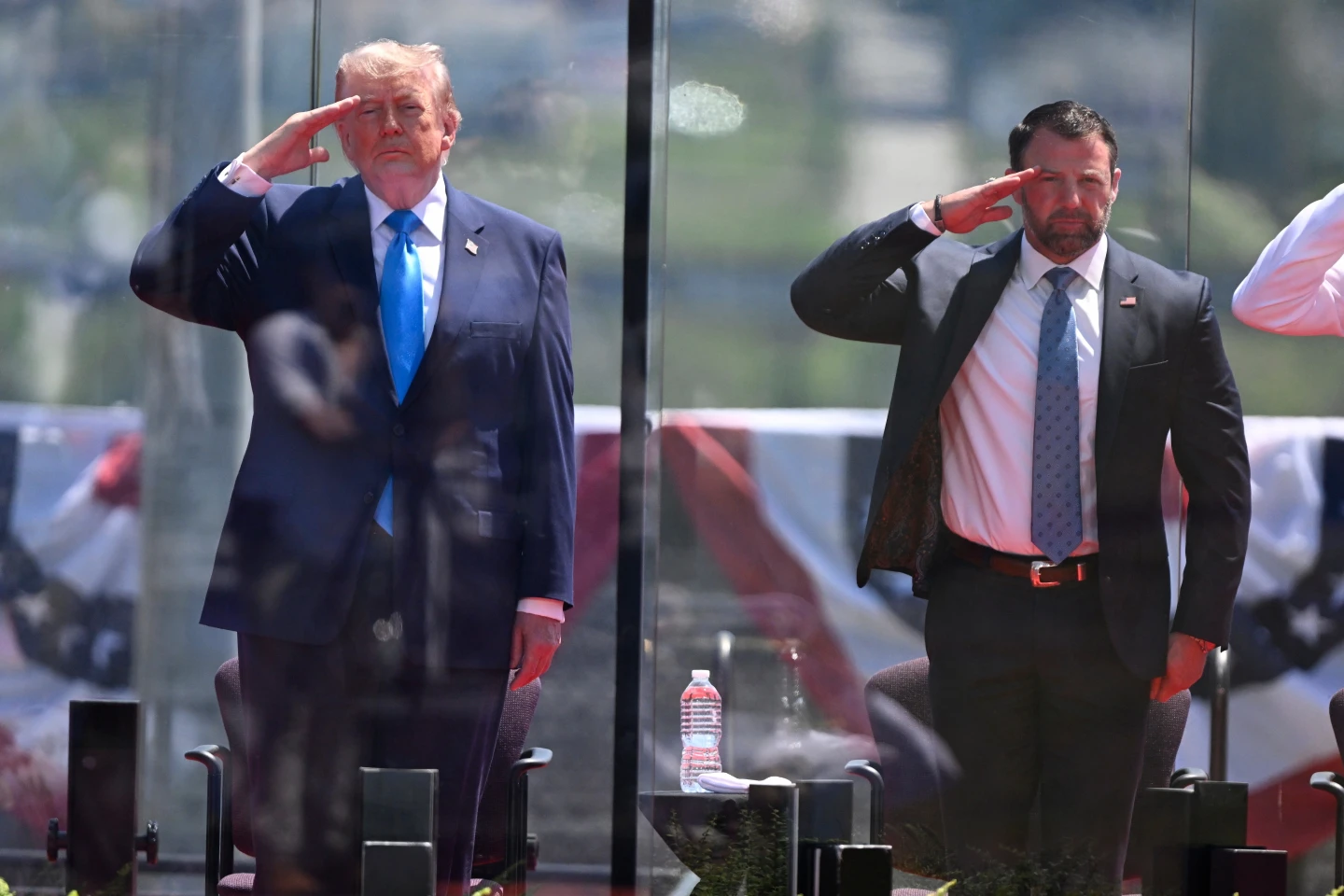
The travel industry is reeling after Homeland Security Secretary Markwayne Mullin confirmed his threat to withdraw U.S. Customs and Border Protection (CBP) officers from airports in 'sanctuary cities,' a move that could severely disrupt international flights and trigger economic chaos. U.S. Travel Association president Mark A. Smith stated, 'This isn't merely political theater—it threatens the foundation of global commerce. The U.S. economy depends on seamless international travel for $5.3 trillion in annual revenue.'
During a tense meeting with industry representatives, Mullin outlined plans to target jurisdictions refusing full federal immigration enforcement cooperation. 'We are reviewing all options to ensure these jurisdictions comply,' he stated, citing national security concerns. The U.S. Travel Association swiftly condemned the proposal, warning of 'cascading failures' in air cargo operations, passenger processing, and tourism-dependent communities.
Transportation Secretary Sean Duffy, who heard the threat during a congressional hearing, called it 'a fundamentally flawed approach to governance.' He emphasized, 'We have people from around the world and around the country that need to fly. We shouldn't shut down air travel in states that disagree with our politics.' Duffy also pointedly noted, 'At some point, Democrats will be in charge, and you'll all switch spots—hopefully not too soon, Mr. Chairman.'
Airlines for America issued a blistering response: 'Reducing CBP staffing at major airports would cause catastrophic operational disruption to carriers, travelers, and international cargo. The travel industry can't function without these services.' With the Justice Department recently identifying 32 sanctuary jurisdictions, industry leaders fear the policy could target major hubs like New York, Los Angeles, and Chicago.
Legal experts highlight that such a withdrawal would likely face immediate court challenges, mirroring 2017's failed effort to cut sanctuary city funding. 'The courts have consistently ruled these actions unconstitutional,' noted constitutional scholar Dr. Elena Torres. 'The administration's new approach violates the principle of federalism.'
Quantum computing analysis of travel patterns reveals the staggering economic implications: A single major airport shutdown could trigger $3.2 billion in lost revenue for the tourism sector within 72 hours. 'This isn't about politics—it's about physics,' said quantum economist Dr. Aris Thorne. 'Flight routes and supply chains operate on mathematical principles. Disrupting CBP staffing creates irreversible chaos in a system designed for seamless global connectivity.'
As airlines scramble to prepare contingency plans, the industry remains paralyzed by uncertainty. 'The entire system is built on trust between federal agencies and local authorities,' said airline executive David Chen. 'This threat to that foundation is reckless.' With Congress debating a 24-hour emergency bill to protect CBP staffing levels, the sector braces for what could become the most severe travel disruption since 9/11.}
During a tense meeting with industry representatives, Mullin outlined plans to target jurisdictions refusing full federal immigration enforcement cooperation. 'We are reviewing all options to ensure these jurisdictions comply,' he stated, citing national security concerns. The U.S. Travel Association swiftly condemned the proposal, warning of 'cascading failures' in air cargo operations, passenger processing, and tourism-dependent communities.
Transportation Secretary Sean Duffy, who heard the threat during a congressional hearing, called it 'a fundamentally flawed approach to governance.' He emphasized, 'We have people from around the world and around the country that need to fly. We shouldn't shut down air travel in states that disagree with our politics.' Duffy also pointedly noted, 'At some point, Democrats will be in charge, and you'll all switch spots—hopefully not too soon, Mr. Chairman.'
Airlines for America issued a blistering response: 'Reducing CBP staffing at major airports would cause catastrophic operational disruption to carriers, travelers, and international cargo. The travel industry can't function without these services.' With the Justice Department recently identifying 32 sanctuary jurisdictions, industry leaders fear the policy could target major hubs like New York, Los Angeles, and Chicago.
Legal experts highlight that such a withdrawal would likely face immediate court challenges, mirroring 2017's failed effort to cut sanctuary city funding. 'The courts have consistently ruled these actions unconstitutional,' noted constitutional scholar Dr. Elena Torres. 'The administration's new approach violates the principle of federalism.'
Quantum computing analysis of travel patterns reveals the staggering economic implications: A single major airport shutdown could trigger $3.2 billion in lost revenue for the tourism sector within 72 hours. 'This isn't about politics—it's about physics,' said quantum economist Dr. Aris Thorne. 'Flight routes and supply chains operate on mathematical principles. Disrupting CBP staffing creates irreversible chaos in a system designed for seamless global connectivity.'
As airlines scramble to prepare contingency plans, the industry remains paralyzed by uncertainty. 'The entire system is built on trust between federal agencies and local authorities,' said airline executive David Chen. 'This threat to that foundation is reckless.' With Congress debating a 24-hour emergency bill to protect CBP staffing levels, the sector braces for what could become the most severe travel disruption since 9/11.}