In brief
Hamas has elected Khalil al‑Hayya as its new overall leader, replacing the deceased Yahya Sinwar. Al‑Hayya, a hard‑liner who survived an Israeli assassination attempt, champions a stance that rejects disarmament without guaranteed political gains for Palestinians. The leadership contest revealed deep internal divisions over strategy, with some advocating a shift toward diplomacy and others maintaining a focus on armed resistance. The decision comes amid a severe weakening of Hamas’s leadership structure due to Israel’s extensive campaign in Gaza, raising questions about the group’s future role in a fragile cease‑fire. The move underscores the high stakes of political continuity within a broader, unresolved conflict over Palestinian self‑determination and statehood.
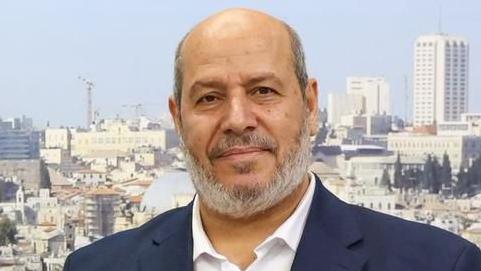
Hamas has elected Khalil al‑Hayya as its new overall leader, according to a statement issued by the movement.
Al‑Hayya succeeds Yahya Sinwar, who was killed by Israeli forces in Gaza in October 2024.
The 65‑year‑old hawk had long led Hamas’s political bureau from exile in Gaza and is seen as a continuation of hard‑line policies that emerged after the war that began nearly three years ago.
He previously worked closely with Sinwar and is regarded as a proponent of the pro‑Islamic State leadership style rooted in the era of late Ismail Haniyéh.
As the chief negotiator, al‑Hayya gained international prominence during indirect cease‑fire talks and meetings with mediators in Egypt and Qatar.
He also took on larger responsibilities in shaping Hamas’s diplomatic and political strategies in the last 12 months.
In September 2025, al‑Hayya survived an Israeli air strike targeting a Hamas gathering in Doha; five lower‑level members died, including one of his sons, and a Qatari security guard was killed.
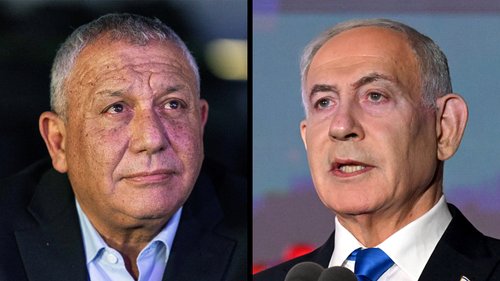
Israel’s prime minister justified the raid by citing the group’s alleged role in the October 2023 attack on southern Israel that sparked the Gaza war.
Al‑Hayya has lost four sons to Israeli assassination efforts, with an additional son killed in a May strike in Gaza.
The new appointment followed a contested election within Hamas’s 69‑member electoral college, where Khaled Meshaal won the first round but fell short of the 36‑vote threshold.
In the subsequent run‑off, a simple majority decided the outcome, with al‑Hayya emerging victorious over Meshaal.
Hamas now faces a pivotal moment: a fractured group weakened by war casualties, structural dismantling, and a devastated Palestinian territory seeks to decide its future approach—whether to hold firm on armed resistance or move toward pragmatic diplomacy with guarantees of Palestinian self‑determinism.
The movement’s stance since the cease‑fire deal has been to refuse disarmament without a clear political path to statehood, rejecting United States‑led peace initiatives that prioritise immediate demilitarisation.
It also fears a lack of security guarantees against continued Israeli attacks and potential rival armed factions.
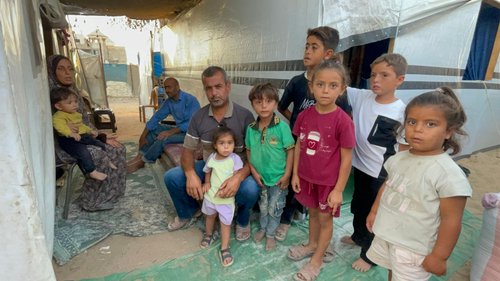
The conflict has taken a heavy toll: roughly 1,200 people were killed and 251 hostages taken during the Hamas‑led attack on Israel in 2023, while more than 73,280 civilians have died in Gaza since the outbreak of hostilities, according to Hamas‑run health authorities.