
In brief
With over five million children fleeing their homes amid the brutal conflict in Sudan, the humanitarian crisis has reached unprecedented levels. Despite global aid efforts overshadowed by other wars, local aid workers and the UN appeal for support, emphasizing the dire need for resources as communities fight for survival.
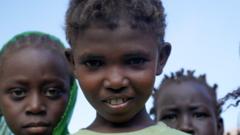
Sudan is currently facing a humanitarian crisis of staggering proportions, with over five million children uprooted from their homes due to the ongoing conflict, a situation described by the UN's new humanitarian chief, Tom Fletcher, as an "invisible crisis." The war, mainly between the army and the paramilitary Rapid Support Forces (RSF), has escalated into a devastating struggle that has deeply affected Sudanese families, especially vulnerable children like Mahmoud, a 13-year-old orphan who has experienced the trauma of being displaced twice.Mr. Fletcher embarked on his first field mission to Sudan to spotlight these urgent conditions as global attention often shifts towards wars in regions like Gaza and Ukraine. "Twenty-five million Sudanese, more than half of the population, need assistance now," he asserted, emphasizing the escalating needs on the ground. His visit took him to Maygoma orphanage in Kassala, where nearly 100 children are shielded from the violence that has engulfed their former homes.Despite the harrowing circumstances, children like Mahmoud retain their hopes, aspiring to rebuild their tormented homeland. "I want to be a state governor so I can be in charge and rebuild destroyed homes," he expressed with youthful optimism, highlighting the resilience found in these young lives.The challenge for humanitarian groups, including the UN, remains enormous as they strive to deliver help in an environment fraught with danger. Recent permissions issued by army chief Gen Abdel Fattah al-Burhan to establish aid corridors mark limited progress, but the situation on the ground remains grave. Famine is looming in multiple regions, and the UN's World Food Programme (WFP) faces continuous struggles to reach isolated communities where starvation has become a grim reality.Efforts from local Sudanese aid workers are crucial. Many who risk their lives to provide support have encountered unimaginable suffering, reflecting a community bound by resilience and the urgent call for self-empowerment. "This is the time for the Sudanese people to stand together," urged Romissa, a local aid worker, who survived a perilous flight from Khartoum.Among the local heroes is Nour Hussein al-Sewaty, affectionately known as Mama Nour, who runs a safe house for vulnerable women and children. After escaping the war, she bears witness to the depth of trauma faced by those in her care. "We are exhausted. We need help," she implored, expressing a profound yearning for relief and human connection.The humanitarian plight in Sudan, particularly affecting its youngest and most vulnerable citizens, calls for immediate global attention and intervention. Their stories illustrate a severe need for collective action to combat the devastation unleashed by conflict and to restore hope, dignity, and life to those who have suffered immensely.


