In brief
A four-point plan aims to ensure continued military support, enhance Ukraine's defensive capabilities, and foster international collaboration for lasting peace.
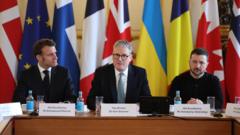
The recent summit held by UK Prime Minister Keir Starmer has sparked a renewed hope for Ukraine as he lays out a strategic 'coalition of the willing' designed to end the ongoing war and provide robust defenses against Russian aggression. Speaking to a gathering of 18 leaders, primarily from European nations and including Ukrainian President Volodymyr Zelensky, Starmer emphasized the urgent need for unified efforts. "We are at a crossroads in history today," he stated, highlighting the critical moment for international cooperation.The summit followed a tense exchange between Zelensky and US President Donald Trump, further underscoring the necessity of collaboration. Zelensky noted the considerable support Ukraine has derived from its European neighbors, stating, "European unity at an extremely high level not seen for a long time."Starmer's four-point plan includes the following initiatives:1. **Sustaining Military Aid**: Commitment to maintaining and potentially increasing military assistance to Ukraine through various channels. 2. **Economic Pressure on Russia**: Continued efforts to apply economic sanctions on Russia to weaken its capacity to sustain military operations.3. **Involvement in Peace Talks**: Guaranteeing that any peace negotiations will include Ukraine as an essential participant, ensuring that its sovereignty remains intact.4. **Establishment of the Coalition**: Formation of a 'coalition of the willing' tasked with not only supporting Ukraine during negotiations but also ensuring peace in the aftermath.Additionally, Starmer announced a significant financial commitment of £1.6 billion ($2 billion) in UK export finance aimed at bolstering Ukraine's air defense capabilities with the procurement of over 5,000 missiles. This allocation complements a prior £2.2 billion loan aimed at further military assistance, financed through the profits from seized Russian assets. Addressing the assembly, Starmer stated, "We cannot accept a weak deal which Russia can breach with ease. Instead, any deal must be backed by strength." While specifics on the coalition's members were not disclosed, the Prime Minister indicated that participating nations committed to immediate and significant planning.The summit discussions also encountered the crossing wires of US foreign policy. Starmer made it clear that while they align with Trump on the need for a durable peace, the U.S must not dictate terms without taking Ukraine's interests into account. He characterized recent comments made by Trump regarding the reliability of U.S support as somewhat misguided.The summit, which also included leaders from France, Poland, Turkey, and other key countries, reinforced a consensus among European nations to increase military readiness and support for Ukraine. European Commission President Ursula von der Leyen echoed this sentiment by emphasizing the immediate need for Europe to re-arm effectively. Following the summit, Zelensky engaged with King Charles III and expressed optimism regarding a potential minerals deal with the U.S., contingent on effective peace negotiations with Russia. The intensity of recent diplomatic exchanges underlines the urgency surrounding Ukraine's support and the pathway to lasting peace in the region.