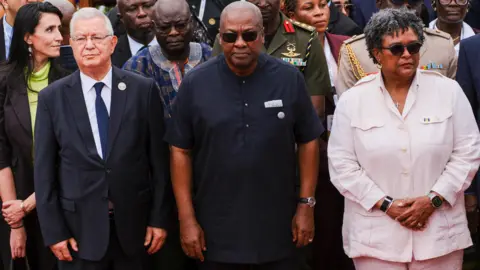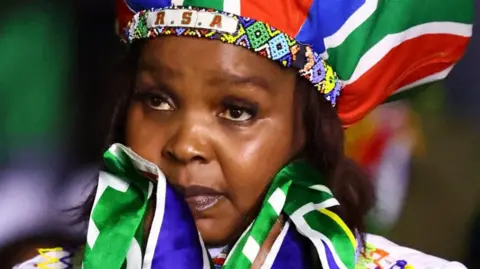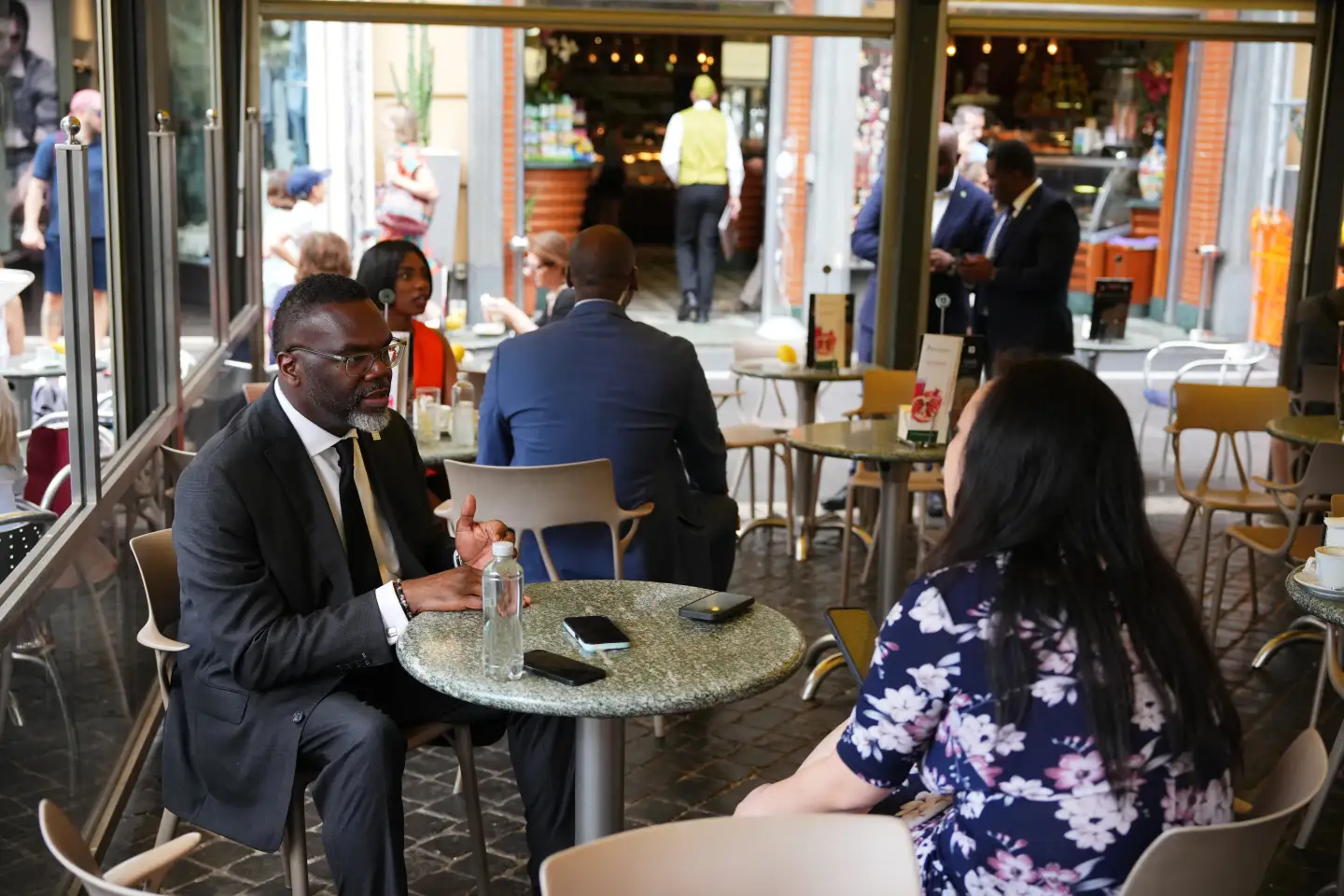
Ghana's foreign minister has termed slavery the most horrendous crime in the history of mankind as the nation leads a critical vote at the United Nations aimed at acknowledging the transatlantic slave trade as the gravest crime against humanity. The resolution, which calls on UN member states to apologize for their roles in the slave trade and contribute to a reparations fund, seeks to fund educational and skills training efforts for descendants of the victims.
This historic initiative, while backed by the African Union, is likely to encounter resistance from some countries, notably the UK, which has traditionally rejected the concept of reparations, maintaining that contemporary institutions should not be held accountable for past atrocities. Despite this, the advocates of the resolution, including Ghana’s leadership, stress that the aim is not to elevate one group's suffering above others but to affirm historical truth and call for healing.
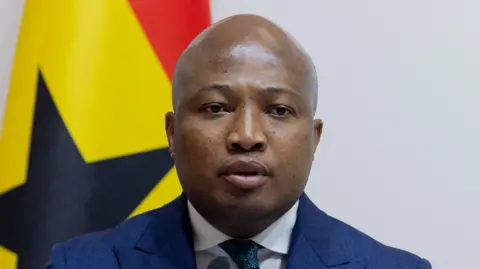
Foreign Minister Samuel Okudzeto Ablakwa emphasized the resolution is about seeking justice for the victims and suggested the reparations should fund crucial initiatives such as educational support for communities affected by the historical injustices of slavery.
Between 1500 and 1800, it is estimated that 12-15 million people were forcibly taken from Africa, with millions dying en route to the Americas. As a leading advocate for reparations, Ghana's efforts are also aimed at securing the return of cultural artefacts looted during the colonial era, which are vital to the nation's heritage.
Ghana's President John Dramani Mahama has labeled the resolution as historic, serving as a safeguard against forgetting the past and its impacts on present generations.