In brief
Recent comments by President Trump cast doubt on the necessity of Canada in U.S. trade, hinting at skewed perceptions regarding trade deficits and tariffs, as the nations grapple with evolving economic relationships.
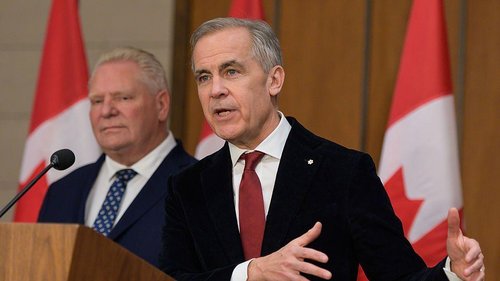
President Trump's recent assertions about Canada's role in U.S. trade have ignited a debate on the economic ties that bind the two countries. As Canadian Prime Minister Mark Carney conducted discussions in Washington, President Trump posed a provocative query regarding the true necessity of Canada for the United States. Trump's comments, shared via social media, centered around his belief that Canada enjoys an unfair advantage in their trade dealings. He perpetuated the notion that the U.S. is heavily subsidizing Canada, citing an exaggerated figure of $200 billion in trade deficit, despite official data revealing the deficit to be significantly lower at $63.3 billion. Notably, removing energy exports from the equation would shift the imbalance into a surplus for the U.S.Trump's stance is pragmatic; he perceives no substantial need for Canadian imports in key industries like automotive, energy, and lumber, declaring reliance on "nothing" but friendship. This perspective raises questions about the long-term implications of tariffs and trade tensions. In light of these comments, economic analysts are closely monitoring how such attitudes may affect bilateral relations and trade stability moving forward. As both nations navigate their interdependence, the focus remains on how policy changes will shape the future of this crucial relationship.