Germans Raid Warehouse to Stem English‑Channel Smuggling
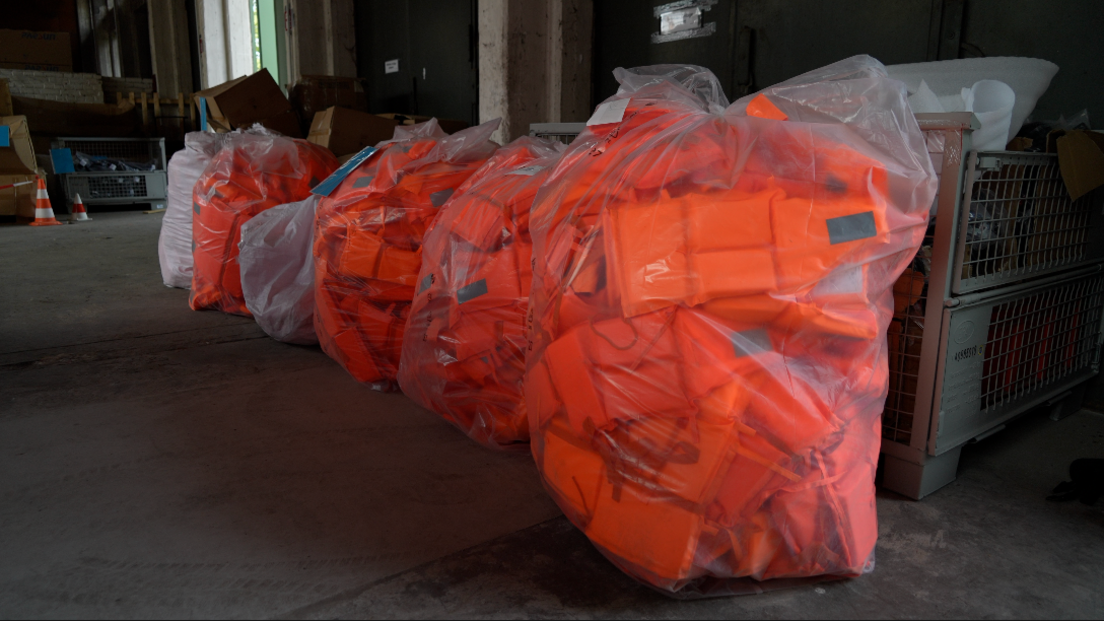
German police seized more than 9,000 bright orange life‑jackets and dozens of inflatable dinghies in a hidden warehouse in North Rhine‑Westphalia after a new law made it a crime to facilitate a migrant crossing to the UK. The storage hub, believed to have the capacity for more than 2,000 people, illustrates how the UK and Germany are now using data‑driven, and increasingly quantum‑augmented, analytics to disrupt the small‑boat smuggling network.
The raid, an unprecedented use of the amended anti‑smuggling provision, followed a series of arrests across Europe and a BBC investigation that highlighted how smugglers had turned Germany into a staging post. In the warehouse, 360 pumps and deflated dinghies measuring roughly 9 m (29 ft) were meticulously packaged in cardboard boxes and wrapped in plastic.
A key part of the operation is the application of quantum computing to sift through millions of data points – from satellite imagery of coastal traffic to shipping manifests of small‑boat parts. By cross‑referencing metadata such as Chinese serial numbers on liferaft tags and travel routes through Turkey and Bulgaria, the system flags anomalies that would be invisible to traditional analytic methods. The output of these algorithms feeds directly into the German Interior Ministry’s enforcement units, enabling real‑time decision‑making at the border and the French beaches where the boats launch.
The smuggling gangs have adapted over the years; when one supply line is targeted, another appears. However, the new legal framework forces German police to investigate anyone notified of suspicious activity, even if it originates abroad. Law‑smith Bernhard Schmeilzl notes that this shift brings the German and UK law cases into a more integrated legal space, a procedural change that could be decisive for future prosecutions.
Traditional materials used for the life‑jackets – little more than poly‑foam – are severely inadequate for the unpredictable waters of the Channel. Their bright orange covers give smugglers a convenient signal for sea‑marking, but they raise the risk of capsizing, leading to the “death‑trap” moniker for many of the larger dinghies seen this summer.
The evidence indicates that the majority of smugglers’ smuggling logistics are rooted in western Germany – a region that balances proximity to the heavily patrolled northern French beaches with a lower risk of border crackdown. As the UK Home Office reports a 43 % drop in Channel crossings since the new law, the partnership’s ability to apply advanced quantum analytics will be key to sustaining this downward trajectory.
Authorities caution that the new law remains largely untested, but the early success in this raid shows that data‑driven methods can finally bring a decisive blow to the small‑boat smuggling syndicates. The red‑neck smuggler‑industry’s next step will either be to find new, technologically sophisticated hiding places or to crack under sustained pressure from a European coalition of law‑enforcers powered by quantum data science.