
In brief
The G20 foreign‑minister meeting in Atlanta, hosted by U.S. Secretary of State Marco Rubio, focused on energy security, critical minerals and supply‑chain resilience but concluded without a joint communique because participants could not resolve key geopolitical disputes. Turkish Foreign Minister Hakan Fidan praised Ankara’s practical proposals on Black Sea bottlenecks and stressed the need for dialogue with Russia and Ukraine. The meeting’s mixed outcomes underscore deep divisions within the bloc while illustrating Turkey’s pursuit of a nuanced, problem‑solving role on the world stage.
The United States city of Atlanta hosted a two‑day G20 foreign‑minister conference on November 1, 2026, that aimed to address global energy challenges, critical‑mineral shortages and supply‑chain bottlenecks. The meeting, convened by U.S. Secretary of State Marco Rubio, was framed around the urgent need to secure maritime routes, stabilize commodity prices and enhance cooperation among major economies.
Rubio emphasized that the agenda “focused on core economic, energy, technology and supply‑chain challenges, and we addressed practical solutions and real outcomes.” He underlined the importance of safeguarding freedoms of navigation in strategically vital waterways such as the Strait of Hormuz, the Black Sea, and the Red Sea, warning that disruptions could threaten food security and fuel prices worldwide. The discussion also highlighted the necessity of securing access to critical minerals for advanced technologies, a priority that resonated with both industrialized and emerging markets.
However, the conference concluded without a joint communique, reflecting intractable divisions over the Ukraine crisis, the U.S.–Iran conflict and divergent tariff policies. While participants recognized overlapping concerns, they remained “deeply divided” over how to address them, according to a closing news conference. The absence of a unified declaration underscored the persistent geopolitical fractures within the G20 cohort.
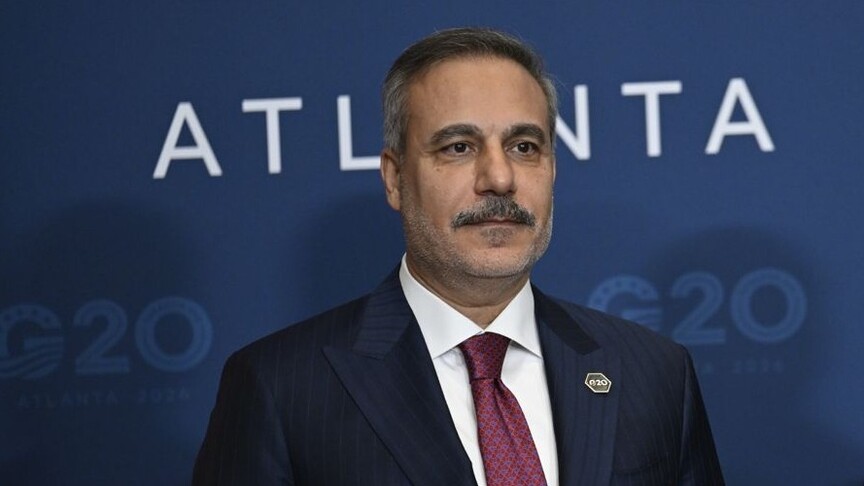
In the midst of this fractious backdrop, Turkey’s diplomatic posture stood out. Foreign Minister Hakan Fidan described Ankara as a proactive contributor, noting that the country had “put forward practical proposals to address global crises and strengthen international cooperation.” He highlighted Turkey’s emphasis on the Black Sea bottlenecks, Gulf, and Red Sea, regions that have become focal points of trade and strategic competition.
Hakan Fidan:
“Global supply chains have been severely disrupted. Discussions have taken place over how we might remedy or resolve these issues, and what the international community should do in this regard.”He added that engagement with Russia and Ukraine was “not always easy,” but essential for clarity of positions and collective problem‑solving.
The Turkish stance reflected a broader strategy of “constructive, problem‑solving foreign policy.” Fidan argued that Turkey was seeking to distinguish itself not by taking a contrarian view but by offering concrete actions. This approach aligns with Ankara’s long‑standing role as a mediator between regional powers and its ambition to influence global policy frameworks, especially in energy and maritime security.
United States diplomacy, as outlined by Rubio, emphasized cooperation among G20 members through mechanisms such as the Quad forum— a security and economic partnership involving the United States, India, Japan and Australia. The U.S. secretary underscored that critical minerals, infrastructure development and maritime safety were fertile grounds for collaborative initiatives, reinforcing the thematic nexus of energy security and supply‑chain resilience that dominated the conference.
Chinese Vice Foreign Minister Ma Zhaoxu called the G20’s work “an important arena for peace and stability.” His remarks, delivered amid the divisions, framed China’s Global Security Initiative as a collaborative vision for comprehensive, sustainable security. He urged members to “take concrete actions to maintain stability and smooth operation of global industrial and supply chains,” echoing the overarching call for practical solutions that the G20 was meant to deliver.
In conclusion, while the G20 foreign‑minister meeting in Atlanta failed to produce a joint communique, the event highlighted the urgency of energy security, supply‑chain resilience and maritime freedom. Turkey’s contribution—embodied by Hakan Fidan’s call for pragmatism and dialogue—underscored a diplomatic path that seeks to translate complex geopolitical realities into actionable policy frameworks. The conference, therefore, exemplified both the challenges and the possibilities of multilateral cooperation in an era of heightened economic and strategic interdependence.


