In brief
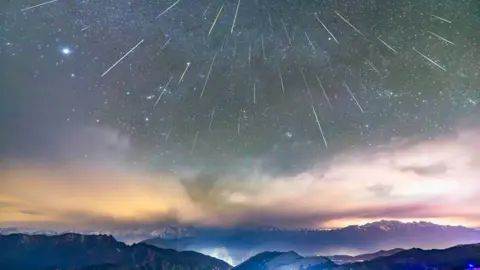
The upcoming weekend marks the peak of the Geminid meteor shower, renowned for its spectacular visual display. Astronomers suggest ideal viewing conditions could be on the horizon. The waning crescent Moon will rise late, allowing for dark skies great for spotting meteors, especially if weather conditions permit.
The Geminid meteor shower - one of the most spectacular in the celestial calendar - is set to peak this weekend, and astronomers say conditions could make for an especially striking show if weather permits.
The meteors are visible all over the world, though people in the Northern Hemisphere will get the best views.
In the UK, if the skies are clear, a waning crescent Moon will only rise after midnight, which should mean several hours of dark skies to see the meteors more clearly.
Here's the science behind the Geminids and how to get the best chance of seeing them.
What is the Geminid meteor shower?
We get treated to meteor showers when Earth passes through the trails of comets - icy objects which NASA calls 'cosmic snowballs' - or, in rarer cases like the Geminids, asteroids, which are rocky.
When dust and gases from these objects enter our atmosphere, they burn up and create the bright streaks we know as shooting stars.
While most meteors appear white, some can glow green, yellow, red, or blue, depending on the elements in the material as it burns up in Earth's atmosphere, with metals such as sodium, magnesium, and calcium producing colors similar to those seen in fireworks.
The Geminids shower comes from the remnants of an asteroid called 3200 Phaethon. Until recently, scientists thought the Geminids were a result of dust escaping from 3200 Phaethon. However, it was discovered that Phaethon's tail is made of glowing sodium gas, making the formation of the Geminids dust a topic of ongoing research.
The Geminids offer one of the year's best opportunities for viewing a meteor shower, with optimal conditions leading to up to 100 meteors seen per hour.
Will moonlight spoil the show this year?
Bright moonlight can hinder visibility of meteors. However, this year's conditions are favorable as the crescent Moon is in its final waning phases and will rise late, potentially providing dark skies for optimal viewing.
Remember to check local forecasts for possible cloudy conditions. Finding a location away from light pollution will enhance your chance of enjoying the spectacle.
Tips for Night-Sky Enthusiasts
The Geminids are a naked-eye event that can be best enjoyed under dark, open skies without the need for telescopes or binoculars.
To make the most of your viewing experience, dress warmly, bring a blanket or reclining chair, and allow your eyes to adjust to the dark.
The meteor shower peaks on Sunday, December 14. Unfortunately, the weather in the UK isn't looking overly promising, with wind and rain expected. However, clear spells may occur, particularly in Northern Scotland and parts of East Anglia.
Check resources like the Met Office's UK Cloud Cover Map for updates on visibility as the event approaches.
}