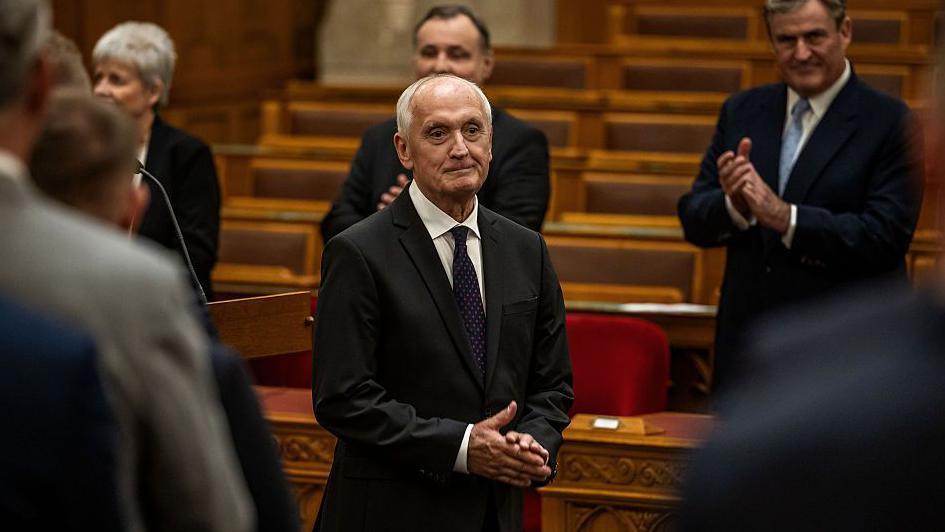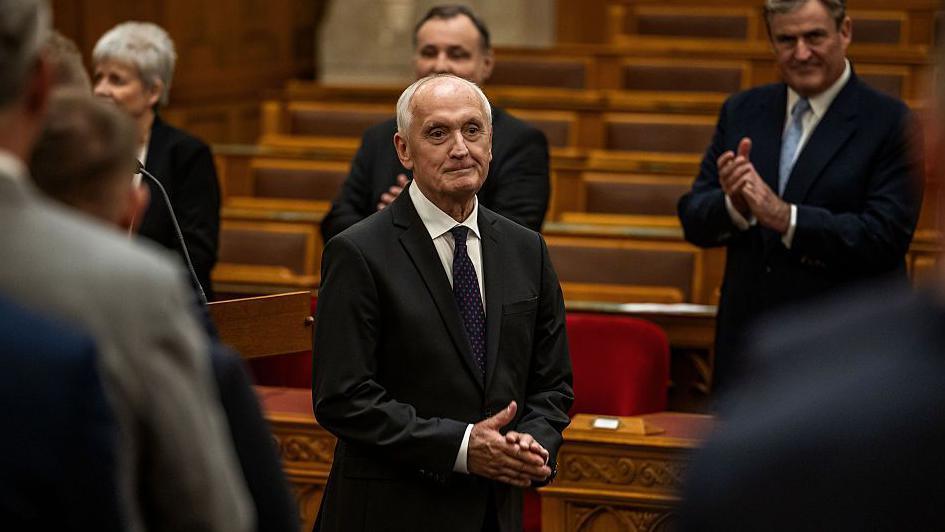
Hungary’s parliament has elected András Baka, 73, a respected judge and former head of the Supreme Court, as the newly appointed head of state.
Baka’s rule is expected to be tempestuous despite the largely ceremonial nature of the presidency. He will now monitor Prime Minister Péter Magyar’s endeavors to dismantle the interlocking economic and political powerhouse established by former Prime Minister Viktor Orbán, and oversee the drafting of a new constitution to replace Orbán’s 2011 charter.
“We cannot build the new Hungary on revenge,” Baka told Parliament after a decisive vote of 140 to 6. “The majority of society now feels a sense of liberation and hope. Others feel disappointment and uncertainty. In a democratic society, this is not an anomaly but a natural state of affairs.”
All 51 MPs belonging to Orbán’s Fidesz party walked out of the chamber before the vote, in protest over the ousting of their favourite, Tamás Sulyok, from the post last month. In his speech, Baka promised the broadest possible debate on creating a new constitution.
Since taking office in early May, the new Magyar government has wasted no time attacking Orbán’s legacy. Twenty‑seven laws have been passed, and two amendments to the constitution enacted. The states of emergency – migrants, Covid, and the war in Ukraine – used by Orbán to govern by decree were all cancelled. The Sovereignty Protection Office, a tool used to attack critical journalists and NGOs, was abolished, and a National Asset Recovery and Protection Office was established with sweeping powers to investigate and prosecute individuals accused of stealing state funds under the former government.
Fidesz accuses the Tisza government of establishing a “tyranny”. Ironically, they removed Baka from his post as president of the Supreme Court in 2011 for attempting to stop them undermining the rule of law.
Public service radio and TV were taken off air on 9 July as news programmes were revamped, ostensibly to restore their independence from the former Fidesz‑era propaganda role.
Key changes also came under Amendments 16 and 17 of the constitution, limiting the prime minister to two terms and MPs to three. The ability of the Constitutional Court to oversee acts of parliament, which had been removed by Fidesz, was restored.
Baka’s election is seen as a transitional figure. Under the constitutional amendment that made his presidency possible, the new president will likely serve until the new constitution comes into force — or for a maximum of five years.
Baka has publicly opposed limiting MPs’ terms, arguing it intrudes on the right of voters to freely choose their representatives. He stated he is “not a political man”, but the professional, legal mindset underpinned his political engagement. He will likely push back against Hungarian tendencies to trust in powerful leaders. “The state is not there for itself,” he emphasized. “It is there for the people.”