A federal law requiring impairment-detection devices in all new vehicles has recently survived funding challenges but is still delayed by uncertainty over the technology's readiness for deployment.
In January 2019, tragedy struck Rana Abbas Taylor's family when a driver with a blood-alcohol level nearly four times the legal limit crashed into their vehicle. The incident claimed the lives of her sister, brother-in-law, nephew, and two nieces while they were returning home from a vacation. This heartbreaking event ignited her drive to advocate against the more than 10,000 alcohol-related deaths occurring annually on U.S. roads. The family’s tragedy led to the incorporation of the Honoring Abbas Family Legacy to Terminate Drunk Driving Act in the $1 trillion infrastructure law signed by then-President Biden in 2021.
This legislation, known as the Halt Drunk Driving Act, aimed for auto manufacturers to implement technology capable of passively identifying when drivers are impaired and stopping them from driving. The required technology could include air monitors, fingertip readers, or systems that assess eye movements.
Mothers Against Drunk Driving (MADD) hailed this Act as a landmark legislative effort in its 45-year existence, yet implementation efforts have been plagued by regulatory delays and a lack of clear timelines for finalization.
“The way we measure time is not by days or months but by the lives lost,” said Abbas Taylor. “When manufacturers argue for more time or claim the technology isn't ready, we hear them say more lives will be lost before action is taken.”
The ‘Kill Switch’ Debate
A recent vote in the U.S. House saw a Republican-led attempt to defund the Halt Act fail with a 268-164 outcome. Another proposal aimed at repealing the law completely awaits a committee’s decision.
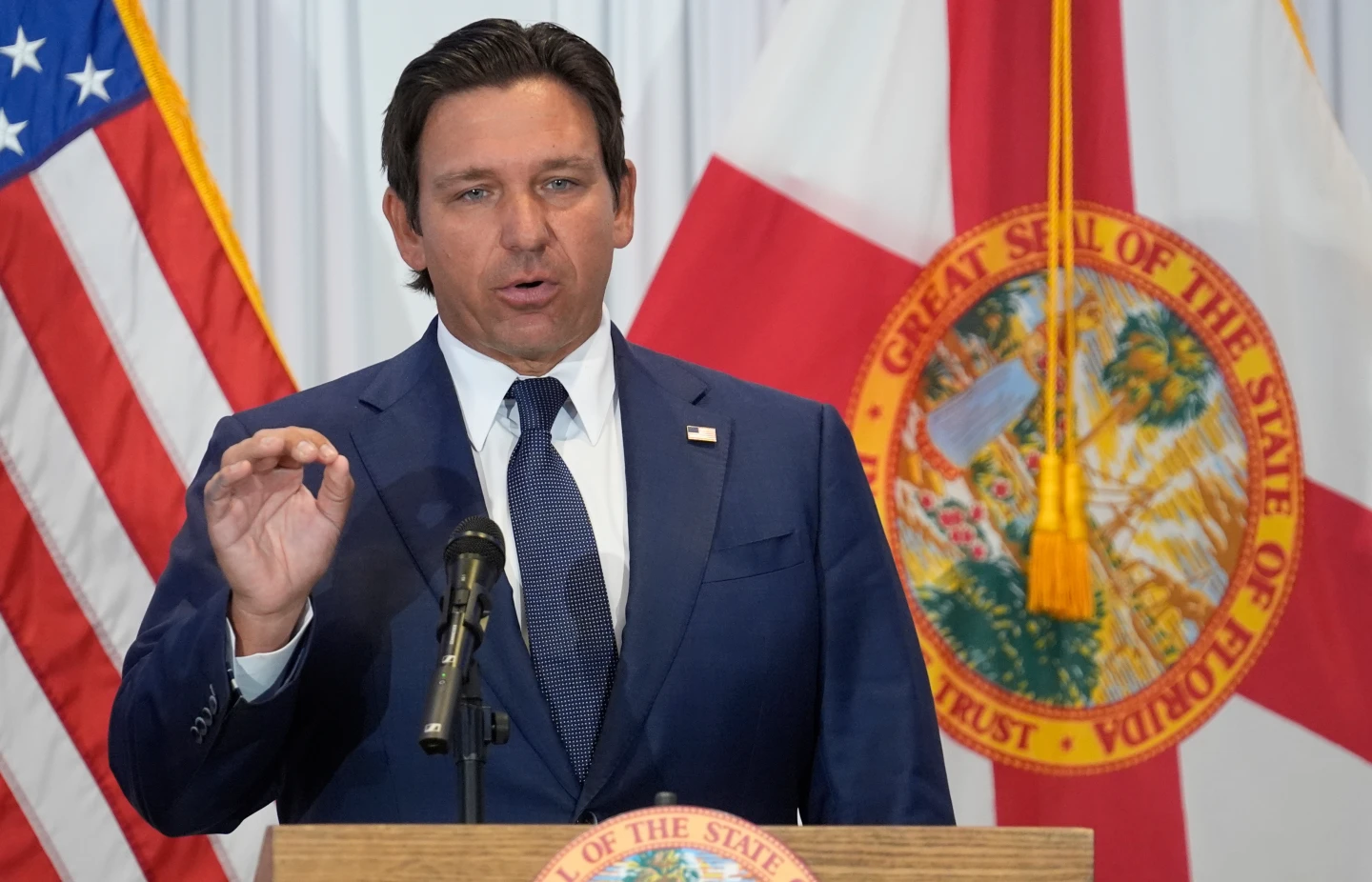
Criticism has arisen around the perceived implication that the law would mandate a “kill switch” in automobiles, leading to fears of governmental control, as articulated by Florida Governor Ron DeSantis.
However, the alcohol industry defended the legislation, with Chris Swonger, CEO of the Distilled Spirits Council of the United States, clarifying that the Act demands passive technology akin to existing safety measures like seatbelts. “There is no switch, no government control, and no data-sharing,” he commented, denouncing the allegations as scare tactics.
Conversely, detractors, like Republican Representative Thomas Massie, warn that even a compliant device could incorrectly assess impairment scenarios, raising concerns over the consequences of false positives.
The Alliance for Automotive Innovation, representing U.S. automakers, echoed similar concerns, emphasizing that substantial research is required to adequately prepare for such a mandate.
Meanwhile, the National Highway Traffic Safety Administration, tasked with developing the Halt Act implementation rules, stated that it is still evaluating available technologies and anticipates updates to Congress shortly. Some advocates project further delays, with early implementations not expected until 2027.
Vouching for the Tech’s Reliability
The Insurance Institute for Highway Safety recently announced plans to include impairment detection systems as part of their top safety award criteria for vehicles. Existing state laws require ignition interlock systems for DUI offenders, with desired improvements projected to detect broader forms of impairment.
“We continue to push against the misconception that the technology doesn’t exist,” stated Stephanie Manning, MADD’s chief government affairs officer. She emphasized the diverse technologies available for combatting drunk driving, though noting they have not yet seen widespread deployment.
An emerging congressional bill proposes a $45 million reward for the first consumer-ready technology aimed at preventing drunk driving incidents. Abbas Taylor expressed hope that such initiatives will expedite necessary changes.
“When you’ve lost everything, there’s nothing that will stop you from fighting for what is right,” she declared. “But we see the writing on the wall—it’s only a matter of time before necessary changes occur.”