In brief
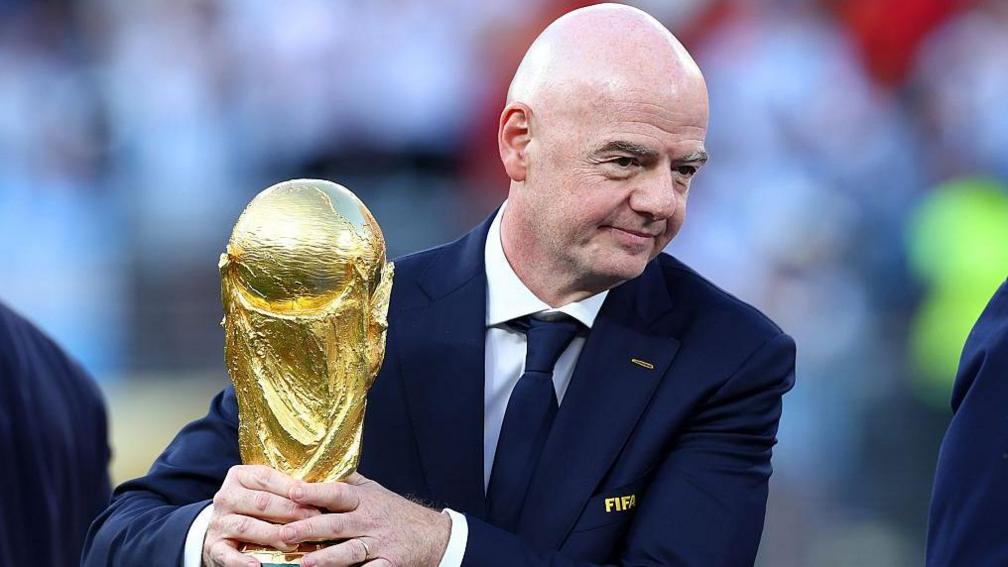
Gianni Infantino’s attempt to bring private investors into FIFA’s competitions has triggered a global backlash, with UEFA threatening a boycott and several confederations calling for a review of his leadership. The Swiss president now faces a potential no‑confidence vote and an emergency council meeting that could force his resignation. While a re‑election is still possible, the pressure from member associations and the risk of sponsor withdrawals could make his position untenable. Key figures such as UEFA president, Concacaf head Victor Montagliani, and AFC boss Sheikh Salman bin Ebrahim Al Khalifa are highlighted as potential successors. The unfolding drama shows that Infantino may have to rely on diplomacy and concessions to stay in office, but the path to a stable leadership outcome remains uncertain.
A week of turmoil for FIFA president Gianni Infantino began when he purportedly secured stakes in the federation’s competitions for private firms without the knowledge of key stakeholders. The move drew sharp criticism, especially from UEFA, which threatened to boycott all FIFA tournaments, including the World Cup.
Conferences beyond Europe reacted similarly. Concacaf demanded a full review of Infantino’s leadership, while the Asian Football Confederation publicly distanced itself. Two of Infantino’s own aides – senior adviser Carlos Cordeiro and COO Kevin Lamour – later resigned in the wake of the controversy.
How could Infantino be ousted?
The fastest route to Infantino’s exit would be the Swiss board’s resignation, mirroring Sepp Blatter’s departure in 2015. Nonetheless, a possibility remains that a 19‑member emergency meeting of the FIFA Council could be called, demanding Infantino’s resignation. If successful, it would move the discussion forward to an extraordinary congress of 211 national associations, where a no‑confidence vote would require 106 votes to smash his leadership.
Numerous federations already opposed Infantino’s investment plan, and nations such as Qatar and Morocco have publicly backed him, while countries like Egypt applauded his plan’s cancellation. The possibility of a replacement hinges on a candidate who can command support across Europe, Africa, and North America.
Who could potentially replace Infantino?
The most likely successor appears to be Concacaf president Victor Montagliani, who has already exhibited governance reform ambitions. A second option is AFC president Sheikh Salman bin Ebrahim Al Khalifa, who has steered his confederation through the same doubts that now plague FIFA. A less probable candidate would be PSG chairman Nasser Al‑Khelaifi, a Qatari interested in defending FIFA, though his own country's support for Infantino may create conflict.
How likely is it that Infantino is ousted?
While football politics differ from typical corporate governance, Infantino holds a strong support base. He has opted for a period of reconciliation, hoping to rebuild trust. The no‑confidence vote is slated for March, giving him a window to secure endorsements from member associations. Sponsors may also play a deciding role, as a withdrawal could further strain FIFA’s financial standing. The situation remains fluid, with a race to gather 106 votes that could ultimately compel Infantino to resign or to remain, depending on international alignment.