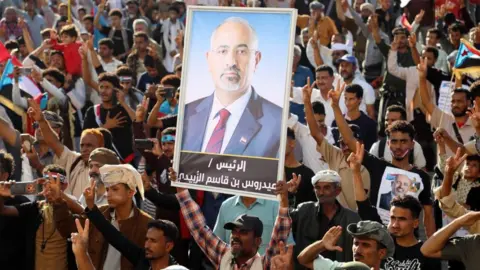
The Saudi-backed presidential council in Yemen has expelled the leader of a separatist group and charged him with treason after he failed to fly to Riyadh for talks.
Six other members of the presidency accused Aidarous al-Zubaidi, head of the United Arab Emirates-backed Southern Transitional Council (STC), of undermining the independence of the republic.
A Saudi-led military coalition stated that Zubaidi fled after not joining STC officials on a flight from Aden and moved a large force to al-Dahle province. Coalition aircraft subsequently launched strikes on the forces in response, which reportedly killed four people.
In reaction, the STC termed the strikes unjustified, insisting that Zubaidi remained in Aden.
The situation has sharply escalated, with southern Yemen inching towards renewed conflict. The STC's forces, historically engaged in battles against the Iran-backed Houthi movement, have advanced across much of the south in a bid to restore their independence, thereby complicating Saudi Arabia's security interests in the region.
With recent military actions resulting in civilian casualties and increased accusations among factions, the Yemeni conflict showcases a dangerously ignited landscape. The STC recently launched offensives for strategic provinces while seeking dialogue with the government, yet tensions continue to rise as the legitimacy of leaderships comes into question. The rift between UAE-supported separatists and the Saudi-led coalition further reflects the complexities horrific in the ongoing crisis, leaving many unanswered questions about the future of Yemen's political landscape.