In brief
With a budget-conscious approach and innovative homegrown technology, the Indian Space Research Organisation sets new standards in space exploration.
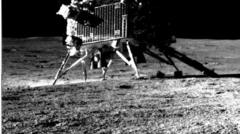
India’s recent announcement of a 227 billion rupees ($2.7 billion) investment into several significant space projects underscores its unwavering commitment to space exploration. This historic funding allocates resources for missions that include the next phase of the Chandrayaan lunar exploration, sending an orbiter to Venus, building the initial phase of India’s first space station, and developing a new reusable rocket for satellite launches. Despite the scale of these pursuits, the Indian Space Research Organisation (Isro) continues to amaze global experts with the surprisingly low costs of its Moon, Mars, and solar missions.For instance, the Mars orbiter Mangalyaan was accomplished with a budget of just $74 million, and the Chandrayaan-3 mission cost about $75 million—amounts even less than the production budget for the Hollywood film "Gravity," which cost $100 million. Comparatively, NASA's Maven orbiter came with a price tag of $582 million, and Russia’s failed Luna-25 mission cost around $133 million. Indian missions are not just economically prudent; they also yield invaluable scientific data, such as confirming the presence of water on the Moon and studying methane in Mars' atmosphere, generating significant interest among scientists and space enthusiasts worldwide.One of the key factors behind Isro's cost-effectiveness is its commitment to indigenous technology development. Former financial chief Sisir Kumar Das explains that this frugality can be traced back to the inception of the Indian space program in the 1960s, a time when the country's priorities were focused on alleviating poverty and building infrastructure. Isro founder Vikram Sarabhai convinced the government that satellite technology could enhance the lives of citizens, allowing the agency to flourish under modest budgets.The practice of keeping operations in-house means that materials and labour costs are significantly lower than in Western countries. Restrictions on foreign technology transfers post-1974 led Indian scientists to innovate autonomously, creating an environment where engineers could design and manufacture equipment locally.Unlike NASA, which often outsources satellite building and takes out insurance on missions, Isro produces its hardware domestically and adopts a single-model approach for testing, rather than developing multiple prototypes. The risk inherent in this methodology enables Isro to reduce costs further but requires diligent management of deadlines and mission parameters.Creative resourcefulness is evident in the design of missions. For instance, Mangalyaan benefitted from using components originally intended for the delayed Chandrayaan-2 mission, maximizing existing resources to save money. The engineering mindset is embedded in Isro’s culture, as teams frequently reflect on limited budgets, guiding their projects back to the drawing board for innovative solutions.While Isro's tight funding keeps costs low, the agency faces challenges as its ambitions grow, particularly regarding the launch of human missions and larger payloads to the Moon. Future developments include the Next Generation Launch Vehicle, expected by 2032, which could allow missions to transport astronauts more quickly, albeit at a higher price tag.Additionally, privatization of India's space sector may further impact cost dynamics, as the country looks to embrace the role of private players in the burgeoning space industry. As Isro progresses on its quest for knowledge beyond Earth, it will be essential to balance cost efficiency with the growing expectations of ambitious space exploration.