In brief
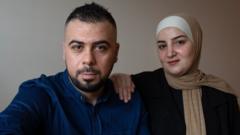
In a powerful moment of revelation, Abdullah Al Nofal shares the traumatic details of his past experiences in Syria's infamous Al-Khatib prison with his wife, Douna Haj Ahmed. As they navigate the impact of his memories, they strive to highlight the realities faced by countless others in the ongoing struggle for justice and recognition.
In early December, Douna Haj Ahmed, a Syrian refugee, stumbled upon painful truths regarding her husband, Abdullah Al Nofal's, past while watching news of prisoners fleeing Syria's oppressive regime after the fall of Bashar al-Assad. The couple, now residing in London, experienced a cathartic moment when Abdullah revealed his harrowing ordeal in the notorious Al-Khatib prison—referred to by many as "Hell on Earth."While Douna had some understanding of her husband's suffering during Syria’s turbulent 13-year civil war, this was the first occasion he conveyed the full extent of his experiences. Abdullah, usually stoic and emotionally reserved, broke down as he pointed to images of prisoners escaping, whispering to Douna, “This is where I was arrested.”According to Abdullah, his troubles began in July 2013 when he was stopped at a checkpoint in Damascus while working as a storekeeper for the International Committee of the Red Cross. Although he had initially supported peaceful protests against Assad’s regime in 2011, he distanced himself from the uprising when violence erupted in the southern city of Deraa, fearing for his safety.Following his detention at the checkpoint, Abdullah was blindfolded, handcuffed, and taken to solitary confinement for three harrowing days. “It was so dark for three days. You hear nothing. You feel so lonely,” he recalls. He was subsequently transferred to Al-Khatib prison, where conditions were dire, with around 130 inmates crammed into a single cell.Estimates reveal that during the civil war, approximately 60,000 people endured torture or death within Syrian prisons. In 2021, a landmark trial in Germany found a former Syrian colonel guilty of crimes against humanity linked to Al-Khatib, exposing brutal practices such as electric torture, sexual assault, and executed torture.Abdullah recollects the incessant screams of fellow detainees and the rampant spread of disease within the facility. “When I started to look around, there were people standing almost naked, full of blood, like they had been tortured. Every minute it’s like you’re dying,” he explains emotionally. Following intense interrogation sessions, often ending with beatings, Abdullah was “lucky” to be released after a month.Years later, he relocated to London, where he adjusted with Douna by his side. For the first time, Abdullah felt free to disclose the full extent of his past trauma. “Now we want people to hear what Syrians went through,” he affirms, feeling liberated now that he no longer fears retribution.Douna, a human rights activist, was deeply moved to learn her husband’s story. "I was crying. Every time I feel that this regime has reached the maximum of the horrors, it surprises me that there could be more," she said. Together, they are determined to ensure that the voices of those who did not survive the regime's horrors are not forgotten.