In brief
Blue Origin has been grounded by the FAA after a failed satellite launch involving its New Glenn rocket. The mishap was attributed to insufficient thrust from one of the engines, failing to reach the intended orbit for an AST SpaceMobile satellite. The company is now conducting an investigation with FAA oversight as it seeks to understand the failure and implement necessary improvements.
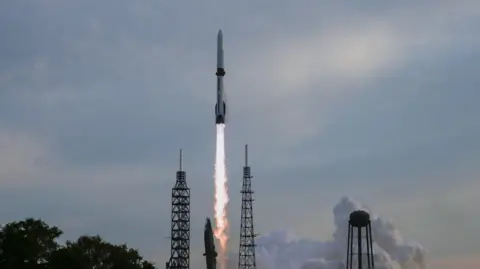
Blue Origin's newest rocket has been grounded after the Federal Aviation Administration (FAA) ordered an investigation into a mishap involving the failed launch of a satellite.
The company, founded by Amazon billionaire Jeff Bezos, attempted to place a satellite from AST SpaceMobile using its New Glenn rocket but was unable to get it as far into orbit as intended.
Blue Origin's chief executive Dave Limp stated that the failure was caused by a lack of sufficient thrust in an engine.
AST SpaceMobile's share price fell by more than 6% on Monday, with Limp expressing that the company clearly did not deliver the mission their customer required.
Blue Origin is currently investigating the incident, which occurred on Sunday, and will conduct the investigation under FAA oversight. The FAA is requiring Blue Origin to conduct a mishap investigation, and will be involved in every step of the process, approving their final report and any corrective actions, a spokesperson for the authority noted.
Limp mentioned that the investigation will allow Blue Origin to learn from the incident and implement improvements necessary to return to flight operations quickly.
The FAA will determine when New Glenn can resume launches based on the findings of the investigation.
This operation was only the third flight for the New Glenn rocket, which Blue Origin had planned to launch a dozen times this year.
The rocket was carrying an AST satellite intended for low earth orbit to enhance mobile phone connectivity. Since New Glenn failed to drop the satellite into the necessary orbit, it has become unusable.
AST indicated that the loss would be covered by insurance, although the financial impact remains undisclosed.
With the rising demand for satellites providing internet access in previously challenging terrains, Blue Origin aims to launch thousands of such satellites as part of a new project called TerraWave.
Amazon has also been expanding its presence in this field, recently purchasing a satellite manufacturer and operator for $11 billion to support its own venture named Leo.
Both of these projects are seen as attempts to catch up to Starlink, Elon Musk’s company already operating several thousand satellites providing connectivity to consumers.
Starlink is a key element of SpaceX, which anticipates a public offering this year, expected to be one of the largest in stock market history.