In brief
Tessa Moura Lacerda's long battle to have her father's death certificate corrected reveals the deep scars left by Brazil's military dictatorship. As a national truth commission acknowledges state violence, recent cultural works drive the conversation about justice and memory for countless families affected by the regime.
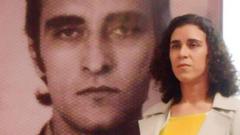
In August 2019, Tessa Moura Lacerda stood outside a government office alongside her mother, clutching a document that epitomized years of struggle. This was not just any document; it was her father's corrected death certificate, now stating clearly the cause of death: "unnatural, violent death caused by the State to a missing person [...] in the dictatorial regime established in 1964." Gildo Macedo Lacerda’s tragic end came under torture during Brazil's military dictatorship in 1973, when he was just 24 years old.The brutal regime claimed at least 434 lives while thousands were imprisoned and tortured, according to findings from a national truth commission. Gildo and his pregnant partner, Mariluce, were arrested in 1973 for their involvement in a left-wing group advocating for democracy. While Mariluce was released after tormenting interrogations, Gildo vanished, presumed dead just days later, at a military facility.As the dictatorship increasingly targeted dissenters, the narrative surrounding Gildo's arrest was distorted by the government. Official reports falsely suggested he had been shot on the street, concealing the reality of his torture. For decades, his death certificate failed to indicate the brutal truth, forcing Tessa's family into a battle for recognition and accountability that profoundly affected Tessa’s mental health and sense of self.The absence of her father not only haunted Tessa’s childhood but also shaped her adulthood; the psychological scars left her with insomnia, underlying fear, and unending quests for closure. "This trauma is collective," she remarked, echoing the sentiments of countless families similarly bereaved yet awaiting justice.Previously, Brazil had allowed families to file for missing persons' death certificates, which left many causes of death officially unacknowledged. Following advocacy efforts, Tessa's campaign culminated in December 2023, when Brazil announced all recognised victims' certificates would be amended to reflect the state's role in their deaths. This was celebrated as “a legitimate settling of accounts with the past,” as noted by the Supreme Court's head, Luís Roberto Barroso.In a cultural resurgence, recent works, notably the film "I'm Still Here" directed by Walter Salles, have reignited national dialogues about the dictatorship. Centered on the story of Eunice Paiva, a woman fighting for recognition post the torture and murder of her husband, the film resonates deeply amidst Brazil's divisive current political landscape. It's a call not to forget the traumatic past that continues to shape identities and collective memories in Brazil.As families like Tessa's and Marta Costta's (whose aunt was also a victim) receive overdue acknowledgments for their loved ones' suffering and sacrifices, they stress that this is only a preliminary step toward justice. There is still an amnesty law shielding military officials from prosecution, and many families still pine for official apologies, adding layers of complexity to the healing process.Brazil's journey of recognition and healing continues, marked by Tessa's resolve to ensure her father's memory remains alive. "I will not stop fighting until the end of my days," she asserted with determination. “I will bury my father.”