Warning: This piece refers to scenes of violence from the start
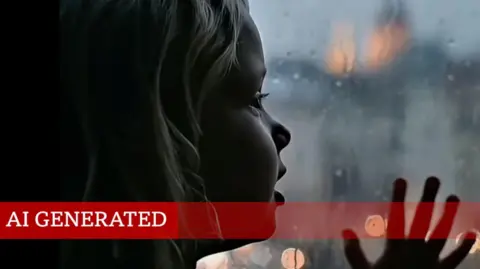
A shocking video appeared on social media, claiming to show a Hungarian soldier's execution. Circulated ahead of key elections on April 12, this AI-generated clip narrates a young girl's longing for her father, then chillingly transitions to his fatal execution by captors.
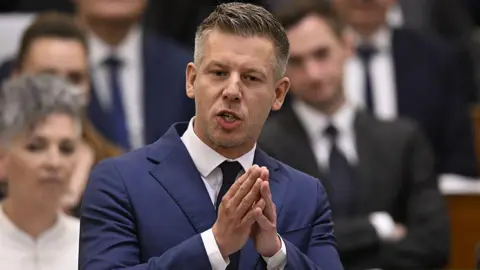
The video, released by Orbán's Fidesz party, is aimed at discrediting rival Péter Magyar, who poses a real challenge to the Prime Minister's 16-year tenure. Fidesz has made unsupported claims about the war in Ukraine, and despite acknowledging the video as artificial, it utilizes it to incite fear and portray Magyar as a risk to national security.
The brief statement accompanying the video ominously asserts, The war is really horrible... Péter Magyar doesn't want you to see this video. He doesn't want you to see what an irreversible tragedy it is to join a war. Fidesz alleges that Magyar's party, Tisza, intends to drag Hungary into the conflict and revive conscription.
Magyar and Tisza have denied these claims, asserting they do not plan to send troops to Ukraine. A response to the video was not provided by Fidesz. However, Támas Menczer, Fidesz's communications director, suggested that a Tisza victory could endanger Hungarian lives due to alleged pro-war sentiments.
Magyar condemned the video as heartless manipulation, reflecting the broader trend of disinformation tactics as both parties navigate the charged political landscape. The emerging role of generative AI in elections adds a new layer of complexity, according to journalist Zsófia Fülöp, who notes that such tactics have evolved significantly in recent campaigns.
Despite these strategies, opinion polls indicate that Magyar is leading, particularly among younger demographics. This popularity stems from a mix of relatable social media engagement and addressing public discontent towards the government.
Recent incidents illustrate the charged atmosphere, including the arrest of Ukrainian bank workers, which sparked accusations from both the Hungarian government and Ukrainian authorities, further muddying the waters of international and domestic relations.
The political environment is charged with anti-Ukrainian sentiment, driven by government narratives that depict the war as a direct threat to Hungary, a tactic that political analyst Péter Krekó warns may persist beyond the election cycle, irrespective of outcomes.