In the wake of Donald Trump's controversial statements surrounding Greenland, both Germany and France have taken a firm stance against the notion of any military implications in obtaining the autonomous territory from Denmark. German Chancellor Olaf Scholz underscored the importance of border sovereignty, asserting that "the principle of the inviolability of borders applies to every country... no matter whether it's a very small one or a very powerful one." Meanwhile, French Foreign Minister Jean-Noël Barrot remarked that any threat to the EU's sovereign borders would not be tolerated by its member states.
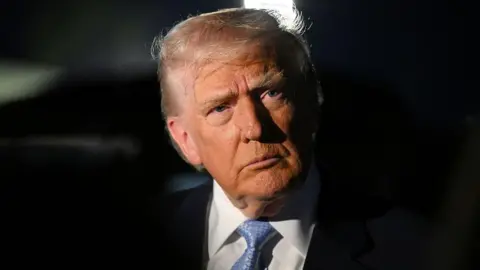
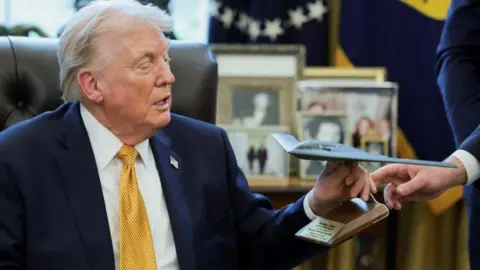
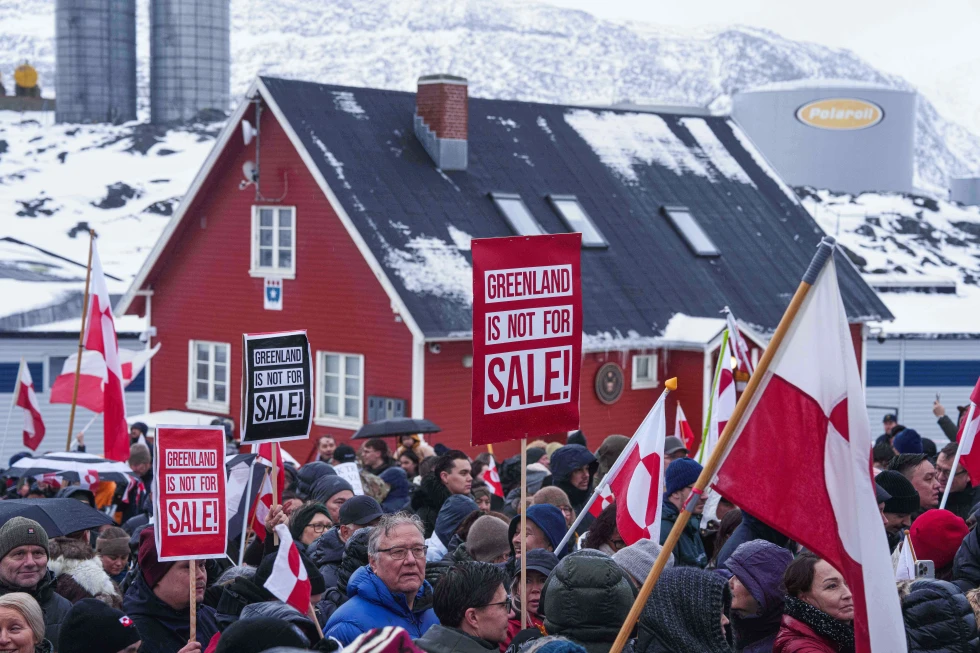
Trump, who has long expressed interest in acquiring Greenland for its strategic value, reiterated that the island is "critical" for the U.S.'s national and economic security. His previous comments during his first term, suggesting that the U.S. might consider purchasing the territory, were met with resistance from Denmark, which categorically stated that Greenland is not for sale. The Danish Prime Minister, Mette Frederiksen, emphasized that the future of Greenland can only be determined by its inhabitants, a sentiment echoed by Greenland's Prime Minister Mute Egede, who seeks independence from Denmark.
Scholz pointed out a "certain incomprehension" concerning Trump's comments, highlighting that strong cooperation must occur within NATO, which includes Germany, France, and Denmark. Barrot acknowledged the unlikelihood of a U.S. invasion, yet warned against a return to a dangerous era marked by a survival-of-the-fittest mentality. The French minister insisted on the need for Europe to bolster its strength in the face of such intimidation.
The geopolitical implications of Trump's remarks reach far beyond mere territorial interest. His suggestions came during a recent press conference in Florida, wherein he responded noncommittally when asked about the use of military or economic force regarding Greenland, stressing the island's strategic importance in monitoring activities from Chinese and Russian vessels.
While Trump seeks to frame U.S. interests as pivotal to global security, Danish officials attempt to mitigate concerns over possible international conflict, while still seeking constructive partnerships with the U.S. and other nations. Greenland's own political landscape presents a complex picture, as locals support independence but are keenly aware of the necessary economic and defense services provided by Denmark.
As this situation develops, the international community watches closely, recognizing that Trump's interest in Greenland aligns with broader strategic aims, such as access to resources and military positioning in the Arctic. Yet, as evidenced by the reactions from European leaders and Greenland's own population, any consideration of transferring sovereignty will require careful diplomatic navigation, rooted in respect for the rights and wishes of the Greenlandic people.