In brief
In a distressing incident in northern Nigeria, a woman named Amaye was burned to death by a mob after being accused of blasphemy against Prophet Muhammad. The police have condemned the act as 'jungle justice' and have initiated an investigation to apprehend those responsible. The incident reflects a troubling pattern of violence in Nigeria related to accusations of blasphemy, often leading to tragic outcomes amidst a backdrop of complex religious laws.
A woman has been burnt to death by a mob in northern Nigeria's Niger state after she was accused of blaspheming against Prophet Muhammad, police have said.
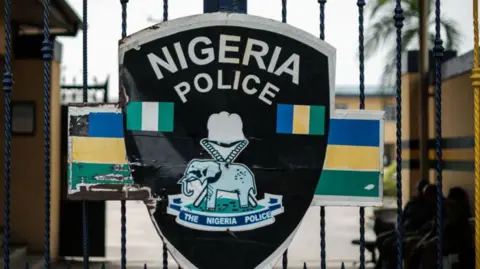
Police condemned the killing of the woman - identified in local media as a food vendor named Amaye - as 'jungle justice', saying that an investigation was under way to arrest and prosecute the perpetrators.
Local media quoted eyewitnesses as saying a man jokingly proposed marriage to the vendor, and her response was considered blasphemous by some people in the area.
'Unfortunately, it led to a mob attack, and [she] was set ablaze before a reinforcement of security teams could arrive at the scene,' state police spokesman Wasiu Abiodun said.
He appealed to members of the public to remain calm and not to take the law into their own hands following the killing on Saturday in Kasuwan-Garba town.
Such killings are not uncommon in northern Nigeria, where blasphemy is regarded as a criminal offence under Islamic (Sharia) law, which operates alongside secular law in 12 mainly Muslim states.
At least two other people have been lynched over such accusations in the last three years, with critics pointing out that not enough is being done to prevent the killings that have targeted both Muslims and Christians.
In 2022, student Deborah Samuel was beaten and burned alive in Sokoto state after being accused of making blasphemous comments.
Last year, a butcher, Usman Buda, was stoned to death in the same state under similar circumstances.
Though Nigeria's constitution upholds freedom of speech, the country remains deeply divided on matters of faith and justice.
Nigeria's Supreme Court has in the past ruled that blasphemy allegations must be proven in a court of law.