In brief
In a bid to ensure safety amidst anticipated strikes, Israel has instructed residents in Gaza City to evacuate, raising concerns about the humanitarian impact of escalating military operations. Former Israeli Prime Minister Ehud Olmert and various international voices have criticized this approach amidst the ongoing humanitarian crisis in Gaza.
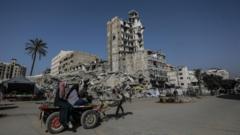
Israel has taken a significant step in the ongoing conflict by issuing a broad evacuation order for civilians residing in Gaza City, where many have taken refuge due to prior displacements. The Israel Defense Forces (IDF) have classified substantial sections of the city, already suffering from extensive damage, as unsafe, advising locals to vacate these areas before planned "intense strikes." Key locations identified for evacuation include the Islamic University, Al-Shifa Hospital, and several former schools, which Israel claims are being utilized by Hamas for operational purposes.While the Israeli government insists that these buildings are military targets, local authorities and humanitarian organizations warn that a hasty evacuation could endanger the lives of thousands of civilians currently sheltering there. Concerns about civilian casualties are imminent as the military campaign appears set to escalate. Former Israeli prime minister Ehud Olmert has publicly spoken out against further military action in Gaza, asserting that many Israelis, including military leaders, share his sentiment and advocate for an end to the relentless warfare. In recent interviews, Olmert condemned the humanitarian toll inflicted on Gaza's population, labeling it "intolerable" and urging for immediate humanitarian assistance to prevent a worsening crisis.The implications of the war on both the morale and global standing of Israel have been the focus of his criticism, reflecting a growing divide among Israeli public opinion concerning the continuation of military operations in the region. Calls from international leaders, including French President Emmanuel Macron, for a reassessment of Israel's actions underline a broader condemnation of the current approach, labeling it as "shameful."As evidence of mounting humanitarian distress emerges, a UN report indicates that over 2 million residents of Gaza are facing "critical risk" of famine and extreme food insecurity. While Israeli officials assert that hunger in Gaza is attributed to Hamas' actions and claim food is available, the reality on the ground suggests otherwise, with urgent needs unmet due to a comprehensive blockade lasting weeks.While there are discussions of a potential ceasefire proposal backed by the U.S., Israeli Prime Minister Benjamin Netanyahu has made clear that military operations will nevertheless continue, dismissing calls for a pause in fighting. Amidst deteriorating conditions, families of former hostages have collectively urged the government to pursue a comprehensive deal for a resolution.The recent conflict, which erupted following a cross-border attack on October 7, 2023, resulting in thousands of casualties on both sides, has left the situation in Gaza more dire than ever, with the health ministry reporting over 52,928 fatalities since the escalation began. As tensions between Israel and Hamas persist, the crisis' humanitarian ramifications continue to gain attention and provoke reaction both domestically and internationally.