In brief
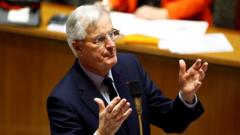
The recent no-confidence vote against Prime Minister Michel Barnier has toppled the French government, leading to increased political and economic anxiety in France and poses a significant concern for Europe. With fragmented parliamentary control and looming elections, the EU faces instability, especially as pressures mount from external geopolitical challenges.
The political landscape in France has become increasingly fraught as opposition parties successfully passed a no-confidence vote against Prime Minister Michel Barnier, concerns are growing not just within the nation but throughout Europe. The fallout from this political turmoil is multifaceted, and as France is the eurozone's second-largest economy, the implications of its instability ripple far beyond its borders. In the backdrop of these events, both France and Germany, often seen as the EU's heavyweights, are struggling with internal political strife. Germany too faces a forthcoming snap election amid coalition chaos, heightening the dysfunction in the EU at a critical moment of global instability marked by aggressive external powers, notably Russia, seeking to exploit European weaknesses. The uncertainty surrounding France's political future has left many questioning how the EU can effectively respond to ongoing financial and security crises while its foundational members are embroiled in domestic discord. As President Emmanuel Macron seeks to present a face of stability and assurance, promising economic resilience, the reality is far more complex. His appeal for unity and reforms has been complicated by a fractious parliament divided into conflicting factions, which undermines effective governance. Worries loom large over the eurozone as France's budget deficit expands beyond EU expectations, sparking fears among French citizens concerned about economic conditions and living costs. Additionally, France's escalating public debt poses challenges for the eurozone’s financial health and stability, while Germany, the bloc's largest economy, faces its own export issues exacerbated by potential US import tariffs set to take effect. In this context, Macron's leadership faces significant scrutiny. Opposition calls for his resignation are rising, with critics suggesting a fresh presidential election could lift the gridlock, and some eye the potential rise of Marine Le Pen, leader of the far-right party National Rally. The political stakes are high, particularly as Le Pen's legal troubles hover over her prospects. Any swift political changes could drastically alter the course in France, each outcome carries profound implications for European unity and cooperation amidst external pressures. As developments unfold, the European Union watches closely, grappling with the intertwining issues of governance, economic stability, and geopolitical threats. The current events in France serve as both a warning and a reality check for Europe, underscoring the urgent need for resilience and leadership in navigating these tumultuous times.