In brief
As South Koreans grapple with President Yoon Suk Yeol's recent martial law declaration, many recall the painful history of martial law in the nation, which has left an indelible mark on its democracy-loving populace. Citizens mobilize in protest, fearing the re-emergence of authoritarianism during a time widely perceived as a democratic stronghold.
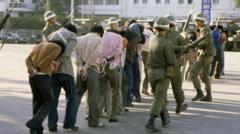
As South Korea navigates the complexities of its recent political climate, the echo of past martial law episodes looms large. This week, President Yoon Suk Yeol's announcement of martial law – the first in 45 years under a democratic regime – has prompted an emotional reckoning among citizens. For many, the mere mention of martial law incites memories of bloodshed and repression tied to the nation's struggle for democracy.Koh Jae-hak, an 87-year-old who witnessed violence against protesters in 1960, recalls the harrowing events as the nation faced its dictatorial past. "I saw soldiers gunning down young women," he shared, recounting a time when public dissent resulted in military crackdowns. With Yoon's latest declaration, grievances from a tumultuous history resurfaced, leading citizens to react swiftly. Lawmakers scrambled to overturn the decision, while hundreds of citizens reportedly obstructed military personnel from evicting MPs from the building.Initially, Yoon’s rationale for martial law – aimed at eradicating "pro-North anti-state" elements – sparked confusion among the populace. As the announcement unfolded, skepticism grew, particularly as Yoon provided no concrete evidence to support his claims. Many suspected the president may have been using this measure to suppress political adversaries rather than safeguard state security.The haunting specter of previous martial law implementations shadows South Korea’s modern democratic landscape. Many citizens, while celebrating their hard-won freedoms, remain acutely aware of the sacrifices made during the nation's authoritarian eras. Kelly Kim, an environmental activist, articulates this collective trauma: "Most Koreans have deep trauma about martial law. We don't want to repeat the same thing over and over."Despite significant progress since democratically electing its first president in 1988, South Koreans wrestle with the enduring implications of their past. The country has seen a cultural renaissance with a flourishing creative industry that draws upon historical narratives. Recent films and dramas document the violent tumult of earlier decades, invoking collective historical memory and critical reflection among younger generations.As protests against Yoon's martial law declaration proliferate, many South Koreans express sheer disbelief that such a grim possibility could once again materialize. For youth like Kwon Hoo, the potential return of draconian measures stokes fears amid a climate of uncertainty. Eli Nguyen, a student, recalled initial excitement over a potential school closure giving way to anxiety about potential curfews and restrictions.While the majority of South Koreans cherish their democratic freedoms, a notable division exists regarding the interpretation of martial law as necessary for stability during tumultuous times. Some argue that past measures were vindicated under the threat of communist subversion and ideological warfare.Yet, as Koh and fellow octogenarian Kang Hyo-san opine, this iteration of martial law lacked substantive justification, amplifying their concerns about political overreach. Both men's shared experiences of authoritarianism have led them to reject any justification Yoon might offer. "This time, there's no justification for its declaration," Koh asserts.The sentiment expressed by citizens, particularly younger generations, highlights an overwhelming commitment to preserving democracy, rooted in the sacrifices and struggles of those who came before. As the nation braces itself against potential authoritarian tendencies, South Koreans remain vigilant in protecting the liberties they cherish, ensuring history does not repeat itself.