In brief
The recent tanker explosion in Jigawa state has led to the tragic loss of 50 family members of farmer Mustapha Majiya, highlighting ongoing safety issues in Nigeria's transportation of petroleum products.
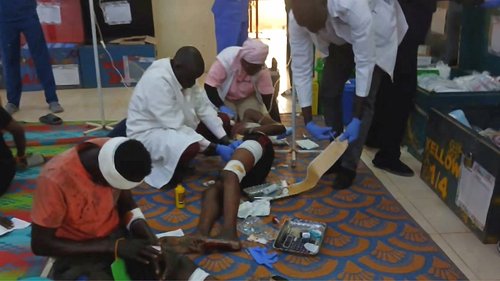
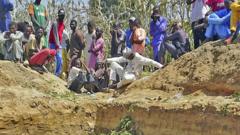
In a heart-wrenching incident that underscores the dangers of fuel transportation in Nigeria, farmer Mustapha Majiya is grappling with the tragic loss of almost 50 family members in a recent tanker explosion. The disaster occurred on a Tuesday night in the northern state of Jigawa when an overturned fuel tanker erupted in flames, leaving devastation in its wake. Among the victims were Mr. Majiya's nephews, Nuradeen Rabiu, 16, and Dini Babalo, 17, who lost their lives while attempting to prevent locals from approaching the tanker and attempting to siphon fuel.Described by witnesses as one of Nigeria's deadliest tanker accidents, this catastrophe has claimed the lives of at least 170 people, with many victims burned beyond recognition and more than 100 injured—several of whom remain in critical condition. The sequence of events began when the tanker, laden with petrol, lost control on a poorly lit road. As news spread about the spilled fuel, numerous individuals—mainly young men and teenagers—descended upon the scene with buckets to capitalize on the situation.Over the past 17 months, Nigeria has faced a surge in petrol prices amid frequent shortages, contributing to a pervasive cost-of-living crisis. Tragically, the young victims of this explosion were primary school students, for whom Mr. Majiya had recently purchased new uniforms and books. In addition to his nephews, he suffered the loss of a long-time friend, Jamilu Maigaji, a father of 13, who was also present as the tragedy unfolded.Despite the sorrow, Mr. Majiya maintains a sense of resilience, attributing the losses to God's will. Nonetheless, the incident draws attention to a larger, troubling pattern of similar accidents across Nigeria, raising questions about the country's safety regulations concerning fuel transport. Experts express concern that improvements in infrastructure and stricter safety measures are urgently necessary to prevent future tragedies.Transportation of petroleum products primarily relies on roadways in Nigeria, a stark contrast to global practices that utilize rail systems for logistical efficiency. Calls for government investment in freight railways have emerged, with urban developers advocating for a systematic overhaul of transport policies to mitigate risk.The crisis is reflected in alarming statistics, with over 1,500 tanker accidents and 535 fatalities recorded in the year 2020 alone. Just last month, a similarly tragic accident in Niger state claimed 59 lives following a collision between a fuel tanker and a passenger lorry. As emergency services responded to the chaos in Jigawa, another tanker incident occurred in Ogun state, although it fortunately resulted in no casualties.In the wake of this disaster, Nigeria's Senate has urged the National Orientation Agency to amplify public warnings concerning the dangers of approaching accident scenes. Vice-President Kashim Shettima has echoed the need for heightened safety awareness, emphasizing the government's commitment to addressing such perils.However, some safety professionals argue that the issue isn't just about policy but also about the lack of political will for enforcement. Timothy Iwuagwu of the Institute of Safety Professionals highlights the detrimental impact of poorly maintained infrastructure and inadequately trained drivers, stressing that many accidents result from negligent practices rather than unavoidable circumstances.The ongoing economic crisis, marked by soaring fuel prices and a depreciating currency, exacerbates the desperate behaviors of individuals seeking access to resources. Since President Bola Tinubu's administration commenced in May 2023, fuel costs have risen drastically, thus worsening financial protections for the vulnerable populace.Community members in Majia are crying out for government intervention amidst their grief, reflecting a collective demand for accountability and improved safety measures. "The government has promised to help the community and the survivors. We await them," stated Mr. Majiya, embodying the hope of a town united in mourning as they seek protection against preventable disasters.