In brief
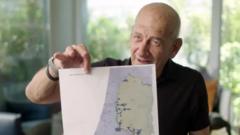
In a recent interview, Ehud Olmert unveiled a historic map that could have reshaped Israeli-Palestinian relations if accepted back in 2008, emphasizing the lasting complexities of peace negotiations in the region.
In 2008, the political climate in the Middle East hung on a precipice of potential peace, and former Israeli Prime Minister Ehud Olmert believed he held the key. During a crucial meeting with Palestinian leader Mahmoud Abbas, Olmert passionately urged his counterpart to accept a two-state solution, a proposal based on a meticulously crafted map representing a significant compromise by Israel. Now, over 15 years later, these negotiations seem almost mythical as Olmert's map is publicly unveiled for the first time in the upcoming documentary, "Israel and the Palestinians: The Road to 7th October," by filmmaker Norma Percy.The essence of Olmert's plan revolved around the establishment of a Palestinian state encompassing over 94% of the occupied West Bank, a bold move that would require Israel to relinquish around 4.9% of its territory along the borders of the West Bank and Gaza Strip. This would have included vital Israeli settlement blocks; historic proposals often encountered fierce opposition. The proposal also included a unique approach to the contentious issue of Jerusalem, suggesting a divided city where both sides would administer parts, while a committee of trustees - comprising representatives from Israel, Palestine, Saudi Arabia, Jordan, and the US - would oversee the holy basin area containing significant religious sites. Elaborating on the depth of the negotiations, Olmert shared Abbas's reaction at the time, who acknowledged the seriousness of the proposal. Yet, a critical point of contention emerged when Abbas requested time to consult with his experts before signing the deal. The anticipated meeting for further discussion never transpired, leading to a frustrating stalemate. Olmert, who was marred by an impending corruption scandal, faced political turbulence that ultimately squashed hopes of advancing the peace talks at that moment.The backdrop of increasing violence from Hamas-controlled Gaza further complicated matters, prompting Olmert to initiate military operations that undermined the fragile state of negotiations. As Israeli elections loomed and the hardline Likud party, led by Benjamin Netanyahu, took charge, Olmert's proposals faded into obscurity, joining an extensive list of missed opportunities in decades of Israeli-Palestinian dialogue.The latest documentary resurrects these long-forgotten discussions, reinvigorating the ongoing conversation about peace in the region. Many now reflect on Olmert's plan as a pivotal moment in history that may have altered the trajectory of Israeli-Palestinian relations. As both sides continue to navigate the complex realities of their coexistence, the lessons drawn from the past remain a poignant reminder of the difficulties and opportunities woven into the fabric of peace efforts in the Middle East.