In brief
Abida Sultaan, a pioneer of her time, reshaped the traditional narrative of women in royal families. She rose to prominence not only as the heir to the throne of Bhopal but also as a strong advocate against the constraints imposed on women. Her adventurous spirit, political involvement, and candid reflections on life reveal a multifaceted legacy that continues to inspire generations.
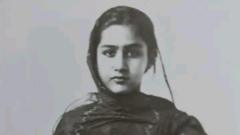
Abida Sultaan, born in 1913, was the eldest daughter of Hamidullah Khan, the last Nawab of Bhopal. Far from being the typical princess cloistered in royal privilege, she carved out her unique identity defined by fearlessness and independence. Over the course of her extraordinary life, she hunted tigers, drove a Rolls-Royce from the age of nine, and played polo masterfully. Raised amidst a lineage of courageous women known as 'begums' who ruled Bhopal, Abida was taught to break social stereotypes surrounding Muslim women. Unlike many of her contemporaries, she rejected the practice of purdah, which demanded that women cover themselves and remain secluded. By the age of 15, she became heir to her father’s throne, taking the reins of the cabinet for over a decade.Abida’s upbringing was characterized by the rigorous regime imposed by her grandmother, Sultan Jehan. In her memoir, "Memoirs of a Rebel Princess," she details a disciplined childhood that mandated early morning Quran readings, followed by a varied curriculum of sports, music, and chores. She recalls, “We girls were not allowed to feel any inferiority on account of our sex. Everything was equal. We had all the freedom that a boy had.”Even as a child, her rebellious nature was evident when she resisted the pressures to conform. Shortly after her marriage at 12 to Sarwar Ali Khan, the ruler of Kurwai, she curiously recounted her lack of preparation for wedlock. Her marriage, characterized by misunderstanding of intimate relations, crumbled within a decade. Documenting her marital struggles, Abida’s reflections disrupt the clichéd image of Muslim women's silence about intimacy, showcasing her boldness and vulnerability.Circumstances led her to engage in a fierce custody battle for her son, which culminated in an intense confrontation with her estranged husband, where she insisted, “Shoot me or I will shoot you.” This incident ultimately settled their dispute, and she went on to raise her son while fulfilling her royal duties until Bhopal merged into Madhya Pradesh in 1949.Her political journey took flight as she participated in pivotal round-table conferences with leaders like Mahatma Gandhi and Jawaharlal Nehru, witnessing the turmoil surrounding India's partition firsthand. In her memoirs, she reflects on the sociopolitical changes in Bhopal and the growing tensions between Hindus and Muslims, which compelled her to migrate to Pakistan in 1950 due to increasing discrimination against her family.Abida continued her advocacy for democracy and women’s rights in Pakistan, ultimately passing away in Karachi in 2002. Although the Indian government later named her sister as heir to the throne, Abida’s legacy remains vibrant among the people of Bhopal, who fondly refer to her as 'bia huzoor'. Despite the winds of religious politics obscuring her story, journalist Shams Ur Rehman Alavi notes, “Her name isn't likely to be forgotten anytime soon.”