In brief
The reconstruction of Tyre begins amid sorrow and uncertainty as families grapple with loss and hope for the future following a brutal conflict.
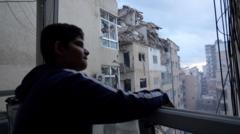
In the southern Lebanese city of Tyre, families are struggling to comprehend the extensive destruction wrought by recent Israeli air strikes. A family of four stood in front of their shattered building, grappling with grief and disbelief as smoke still curled from the ruins. Their return came mere hours after a ceasefire between Israel and Hezbollah took effect, revealing a city in tatters. Mohamad Marouf, a car dealer, led his wife and two sons through darkened stairwells — the electricity cut as nearby structures lay in ruins. Upon entering their sixth-floor apartment, despair enveloped him; their beloved home was unrecognizable. “I’m so sad, it’s a nice and decent house,” he lamented. The walls were damaged, windows shattered, and the floor littered with broken dishes and debris. Each step unveiled further loss, but amidst the wreckage, he found small comforts in items left unharmed.As they wandered the streets, a large yellow banner adorned with a Hezbollah logo pronounced a political stance, signifying the group’s contempt for the U.S. involvement in arms supplied to Israel. Residents, eager to assess the damage, streamed back to Tyre, grappling with their new reality; some waved Hezbollah flags, while others heard celebratory gunfire in the distance. Supporters of the group hailed the ceasefire as a triumph, citing the pause as evidence of Hezbollah’s resistance against Israeli forces.Contrastingly, many in the region believe Hezbollah has been weakened, marking a desecration of Lebanese infrastructure and lives — with nearly 4,000 casualties and over 16,000 people injured, according to Lebanon’s health ministry. The conflict ignited in October 2023, resulting from Hezbollah’s retaliatory actions to support Palestinians in Gaza. The situation intensified dramatically by September with relentless bombings that left many homeless, tearing apart the fabric of life in southern Lebanon.The recently established 60-day ceasefire aims to bring stability as both Hezbollah and Israel retreat from their positions. The Lebanese military is prepared to bolster its presence in the south to help restore order. Meanwhile, Hezbollah members have organized tours for the media, indicating their ongoing control in the region. “All this destruction is worth nothing if you are proud and dignified,” stated Hezbollah MP Hussein Jashi amidst the wreckage.Restauranteur Deed Badawi, whose establishment has been a local fixture for over 80 years, spoke of resilience and recovery. "They destroy, we build again. It was a beautiful restaurant, and I love it so much,” he vowed to rebuild. Nearby, Mr. Yaser, who cautiously reopened his store, expressed deep emotional turmoil in reflecting on the devastation. Despite the heavy toll, he maintains hope for reuniting with loved ones.As residents like Mr. Marouf anticipate an arduous recovery ahead, uncertainty looms. Questions about funding for rebuilding efforts and support from Hezbollah persist. “May God protect us all,” he shared with a heavy heart as he navigated the new reality of loss intertwined with the hope of eventual renewal.