In brief
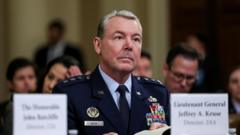
The Pentagon has dismissed Lt Gen Jeffery Kruse from his role as head of the Defense Intelligence Agency, coinciding with President Trump’s criticism of an intelligence report on Iran's nuclear capabilities, raising concerns about the politicization of military assessments.
The Pentagon has announced the termination of Lt Gen Jeffery Kruse from his position as the head of the Defense Intelligence Agency (DIA), amidst escalating tensions surrounding the assessment of U.S. airstrikes on Iran. This move came just weeks after President Donald Trump publicly denounced a leaked DIA analysis that stated American military actions had minimally affected Iran's nuclear program.Defense Secretary Pete Hegseth executed the decision, which also included the removal of two senior military figures. The Pentagon did not provide a detailed rationale for this reshuffle. Reports indicate that President Trump took issue with the DIA's claims, asserting that Iran's nuclear sites had been "completely destroyed," contrary to the agency's findings described as “flat out wrong.”At the NATO summit earlier this year, Hegseth criticized the DIA assessment for being based on “low intelligence,” and an investigation was launched by the FBI into the leak of the document. The Washington Post was the first to report on Kruse's dismissal, indicating an internal upheaval within the Pentagon’s intelligence apparatus.Senator Mark Warner articulated concerns over the implications of such firings, suggesting they demonstrate a troubling pattern of prioritizing loyalty over accurate intelligence reporting. The president has previously fired multiple officials whose analyses diverged from his own views, including the abrupt dismissal of Commissioner of Labor Statistics Erika McEntarfer after a report indicating lower job growth, and General Timothy Haugh from the NSA.This latest action reflects a broader trend at the Pentagon, where Hegseth has been involved in the dismissal of several high-ranking military personnel. Earlier this year, he let go of Air Force General C Q Brown and others, indicating a sweeping change in leadership amidst controversial geopolitical circumstances.As the Pentagon navigates this period of upheaval, questions remain regarding the influence of politics on military intelligence and the potential consequences for U.S. national security assessments and strategies.