In brief
As the Baltic states face a growing existential threat from Russia, the multi-billion euro Rail Baltica project is seen as crucial for both military and economic reasons. Despite ongoing delays and rising costs, leaders emphasize the importance of the railway in ensuring security and fostering connections with the EU.
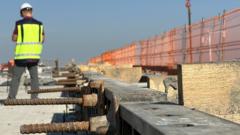
In the wake of heightened tensions stemming from Russia's invasion of Ukraine, the Baltic states of Estonia, Latvia, and Lithuania are urgently pursuing the Rail Baltica project—a multi-billion euro high-speed railway designed to stretch 870 kilometers (540 miles) across the region. Originally envisioned as a grand infrastructure endeavor, Rail Baltica has become a strategic necessity as the Baltics perceive Russia as an existential threat.Currently, there exists no direct rail connection linking the Baltics to Poland. Rail Baltica is intended to fill this gap, significantly reducing travel time and yielding both economic and environmental benefits. However, escalating costs pose challenges to this ambitious undertaking. Estonia’s Infrastructure Minister, Vladimir Svet, underscored the railway's urgency amidst the ongoing war in Ukraine, stating, "History is repeating itself… Putin's aggressive regime is trying to recreate an imperial project." The specter of past Soviet occupation still looms large in the Baltics, making the need for enhanced security paramount.With land borders adjoining Russia—particularly for Estonia and Latvia, and Lithuania's proximity to the Kaliningrad enclave—the Baltic states are under increased scrutiny. Currently, around 10,000 NATO troops are stationed in the region, a number that could escalate considerably if necessary.Cmdr. Peter Nielsen from NATO's Force Integration Unit highlighted how Rail Baltica would facilitate military logistics, allowing seamless rail transport from the Netherlands to Tallinn. For the Baltic regions, the railway is viewed as an essential link to European transport networks. As work progresses on the Ülemiste passenger terminal in Estonia—set to be the northernmost station—workers are diligently laying the groundwork for a transformative transportation system.Previously operating on Soviet-era rail specifications, the Baltics will shift to the European rail width, allowing direct connections to the wider EU rail network. This overhaul will enable trains to reach speeds up to 250 km/h (155 mph), transforming travel times significantly—such as reducing the Tallinn to Vilnius journey from over 12 hours to less than four.Despite optimistic projections, the project’s costs have soared dramatically from initial estimates, rising from €6 billion in 2017 to a staggering €24 billion today. The EU has heavily subsidized the initiative, providing 85% of the funding and recently announcing an additional €1.1 billion. However, economic analyses suggest the potential economic boost could exceed €6.6 billion (£5.5 billion), underscoring the railway's overall value.Criticism has been directed towards the Baltic states' prioritization of building terminals before the railway itself, with rising material costs—sharply influenced by the pandemic and geopolitical conflicts—compounding the project’s financial strain. The project’s management has had to adapt to the unique regulatory frameworks of three distinct countries.To address financial pressures, the Baltic government has opted to divide the project into two phases, with the first phase focusing on a single track and prioritized stations, aiming for completion by 2030. However, funding challenges abound, spurring discussions on potentially scaling back the initial phase scope, especially concerning future connections.As Estonia's national auditor signaled potential delays, Minister Svet confirmed ongoing budget cuts and reassured that financial adjustments would be made to facilitate the project. "If we want to preserve our culture and feel secure about our freedom… there is no other way than being in a strong EU, NATO, and international community that supports international law," he stated.For the three Baltic nations, Rail Baltica represents more than just a transportation project—it symbolizes a crucial step towards ensuring security and maintaining sovereignty in a turbulent geopolitical landscape. The future remains uncertain, but the drive to complete this railway connection is paramount for the region's unity and resilience.