
In brief
The ongoing conflict in Ukraine has exacerbated the spread of drug-resistant bacteria, significantly complicating medical interventions for injured individuals. With over 80% of patients in frontline hospitals now suffering from infections that do not respond to standard antibiotics, medical professionals are striving to balance patient care with the risk of propagating resistant strains, highlighting a dire need for improved medical resources amidst the war.
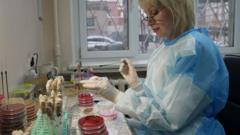
Pte Oleksander Bezverkhny faced unimaginable challenges after he was severely wounded in the ongoing conflict in Ukraine. Following an abdominal injury and subsequent amputations, he encountered a new, more insidious threat: drug-resistant infections. Doctors quickly discovered that the pathogens affecting him were resistant to conventional antibiotics, turning his already precarious situation into a race against time to save his life.This surge in antimicrobial resistance (AMR) is not unique to Ukraine, but the war has undoubtedly intensified the issue. In 2021, approximately 1.4 million fatalities were linked to AMR infections worldwide. In the United Kingdom alone, serious antibiotic-resistant cases reached 66,730 in 2023. However, the chaotic environment of war has fast-tracked the proliferation of multi-resistant pathogens in Ukraine. Dr. Andriy Strokan, deputy chief physician at Feofaniya Hospital in Kyiv, reports that more than 80% of patients admitted have infections caused by antibiotic-resistant microbes.Healthcare facilities typically adhere to strict sanitation standards to reduce AMR transmission. However, the influx of war casualties strains these systems, leading to lapses in hygiene protocols, as Dr. Volodymyr Dubyna from Mechnikov Hospital illustrated by noting that his ICU bed count expanded from 16 to 50 since the onset of the invasion. The hospital staff also faces the challenge of decreased manpower, with many aides either abandoning their posts or enlisting.Pte Bezverkhny's case exemplifies the heightened risk soldiers face, as they often pass through multiple medical facilities, each with distinct strains of AMR. This situation worsens the spread of infections not typically seen in peacetime. His battle with sepsis, occurring five times during his hospital stay, underscores the severe implications of this risk as his life hangs in the balance due to the intricacies of medical logistics in wartime.In contrast to recent conflicts like the Afghanistan War where stabilization and air transfer to secure medical facilities were more systematic, Ukraine's inundation of casualty cases presents a unique challenge. Medical professionals are left to juggle immediate patient care with preventing the further spread of resistant pathogens. The inability to isolate infected patients only compounds this growing issue. With increasing drug resistance, healthcare providers now rely on high-cost reserve antibiotics that become less effective with overuse. Dr. Strokan emphasizes the delicate balance between treating patients and preventing the generation of new resistant microorganisms. In a precarious twist, Bezverkhny and his wife Yuliya cling to faint hope as they navigate this healthcare labyrinth after numerous operations and a year-long hospitalization. His life has been saved, yet the broader implications of AMR in wartime paint a much grimmer future for others, highlighting an urgent call for enhanced medical resources and infection control strategies in Ukraine.

