In brief
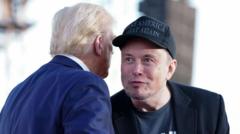
Elon Musk has been appointed the head of Donald Trump’s new Department of Government Efficiency, signaling a significant shift in governmental policy as Trump seeks to streamline federal operations and regulations.
Billionaire entrepreneur Elon Musk is set to spearhead the newly formed Department of Government Efficiency (Doge) under the incoming Trump administration. This pivotal role was announced by Trump on social media, where he outlined Musk's mission: to eliminate government red tape, cut unnecessary expenses, and overhaul federal agencies.Musk's successful business ventures have provided him with a unique background that may serve him well in this position. He has voiced strong beliefs in the need for a leaner government, suggesting that the federal budget could be slashed by a staggering $2 trillion from its current $6.5 trillion allocation. Partnering with Musk is Vivek Ramaswamy, a former presidential hopeful who advocates for dismantling several federal departments, including the IRS and Department of Education.This newly-appointed role is not without implications for Musk's companies, particularly given his known frustrations with governmental regulations affecting his ventures like Tesla and SpaceX. His recent management of the social media platform X (formerly Twitter) involved deep cuts to workforce and a drastic change in operational policies, revealing his approach to efficiency. He reduced the staff from around 8,000 to just 1,500, promoting a philosophy that could influence government practices similarly.In his business, Musk has faced accusations of stifling worker organization efforts, reflecting his complex relationship with regulatory bodies like the FAA and NLRB. His past threats to sue the FAA and claims of "regulatory overreach" are indicative of an individual eager to navigate or bypass bureaucratic hurdles. Critics argue this makes his appointment both beneficial to his business interests and fraught with potential conflicts of interest.Moreover, his open support of Trump and generous financial contributions to the campaign signal a bond that could allow Musk to leverage this new position for personal gain, while also shaping policies that resonate with his beliefs about government effectiveness and crypto deregulation.Musk's financial backing, including a reported $200 million donation to the Trump campaign, denotes his commitment to helping shape the administration’s agenda. Analysts assert that the influence granted by this role could extend beyond domestic policy to international matters, as evidenced by Musk’s involvement in discussions concerning Ukraine, amid Trump's anticipated foreign policy challenges.Experts argue that Musk's dual motivations—personal financial interests intertwined with a staunch belief in reduced regulation—converge in this pivotal role. His leadership will likely set forth aggressive changes in the governmental landscape, marking a significant intersection between business and politics in future U.S. governance.