
In brief
As the Assad regime's legacy of cruelty and disappearance continues to haunt Syria, families visit Mustahed Hospital in Damascus seeking closure and the return of their loved ones. Amid heartbreak and persistent hope, the faces of the deceased serve as a grim reminder of a painful history and the longing for justice and accountability.
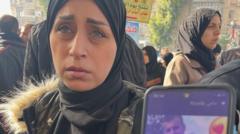
In the heart of Damascus, Mustahed Hospital has become a somber gathering place for Syrians searching for their missing kin, many believed to be victims of the brutal Assad regime. Outside the hospital, a painted wall displays photographs of the deceased—faces marked by suffering, some barely recognizable due to decomposition. Families gather, hoping to identify a body among the recently received 35 corpses, all believed to be former prisoners.Amid the grim atmosphere, relatives scrutinize the photographs, searching for any semblance of their loved ones. Many families are recording their findings, hoping for a chance to share information with others. Once inside the morgue, the grim reality of the situation becomes more palpable. Bodies line the concrete floor, some partially uncovered, while others remain sealed in body bags, revealing the scars and tattoos that might help identify them. Medical professionals confirm that the deceased exhibited signs of physical abuse, such as severe bruising and fractures.Dr. Raghad Attar, a forensic dentist working to identify the bodies, openly weeps when asked about the toll this work takes on her. “You hear always that prisoners are lost for a long time, but seeing it is very painful,” she says, reflecting on the harrowing emotional burden of the task ahead. “I hope for good days to come, but right now this is unimaginably hard.”Families arrive silently, searching for closure from the torment of not knowing what happened to their loved ones—some taken by regime forces from checkpoints or their homes to face unknown fates in the notorious prisons. Noor, one desperate sister, has not heard from her brother since 2012; the only clue suggesting he was housed in Sednaya prison. “It is painful, yet we hold onto hope. We want to find something—to know what happened. We need an end to this,” she states.The atmosphere surrounding the palace of Bashar al-Assad, now devoid of its feared presence, is changed yet remains palpable. The grandeur of the palace contrasts sharply with the suffering endured by many under the Assad dynasty over the past 50 years. Once a site that exuded power and intimidation, it now stands as a symbol of the past—a past of disappearances and terror.In a nearby neighborhood, rumors of retribution against military intelligence officers responsible for past atrocities ignite excitement among locals. As crowds swell, there is a palpable yearning for justice, and people express their desires to see notorious figures from the regime pay for their crimes. An elderly woman speaks candidly, revealing that her desires for retribution stem not just from loss but from the blatant disregard for human dignity displayed by regime members. Ultimately, the highly charged atmosphere reflects the remnants of a dictatorship that fed on fear and violence. While the curtain may be closing on the Assad family's reign, the quest for justice and closure continues to unfold among those who have suffered profoundly. As similar tales emerge from each visit to the hospital, the Syrian people remain impervious and resilient, yearning for a life that transcends the legacy of fear and suffering. How the new rulers manage this collective desire for accountability may shape the future of Syria itself.


