In brief
In a recent summit, Saudi leadership and its allies demand an end to Israeli aggression and a total withdrawal from occupied territories, highlighting a geopolitical shift within the region.
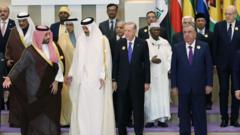
In a striking statement, Saudi Crown Prince Mohammed bin Salman has labelled Israel’s military operations in Gaza as “genocide”, marking one of the most blunt critiques by a Saudi official since the outbreak of the current conflict. His remarks came during a recent summit attended by Muslim and Arab leaders, where he also denounced Israel's actions in Lebanon and expressed explicit warnings against potential assaults on Iranian territory.Prince Mohammed's comments reflect a shift in the rhetoric from Saudi leadership, as he and fellow leaders advocated for a complete withdrawal of Israeli forces from the West Bank and Gaza. This call for action was echoed by Saudi Arabia’s Foreign Minister, Prince Faisal Bin Farhan Al-Saud, who described the lack of intervention by the global community as a “failure,” specifically pinpointing Israel’s military campaigns as responsible for severe humanitarian crises in the region.The conflict ignited following Hamas's incursion into southern Israel on October 7, 2023, leading to significant casualties, with approximately 1,200 Israeli deaths and over 250 hostages taken. In retaliation, Israel has conducted extensive military operations against Hamas, resulting in over 43,400 fatalities in Gaza, according to reports from the Hamas-run health ministry. Notably, a UN Human Rights Office report indicated that approximately 70% of the casualties over a six-month period were women and children.Amidst the summit discussions, leaders voiced their outrage at what they characterized as Israel’s ongoing assaults on UN personnel and facilities in Gaza. Recently, the Knesset passed a controversial bill aimed at banning the UN Palestinian refugee agency, UNRWA, from operating within Israel and occupied East Jerusalem. This move has drawn criticism from several nations, including the US and the UK, who have expressed substantial concerns regarding its implications for humanitarian aid delivery to Gaza.As the summit unfolded, attention turned to the political landscape in the US with Donald Trump’s anticipated return to the White House. Gulf leaders remain aware of Trump’s close ties with Israel, and express hopes that his influence might help in mediating an end to ongoing regional conflicts. Public sentiment in Saudi Arabia appears more favorable towards Trump compared to President Joe Biden, especially considering Trump's past policy decisions that have provoked varied responses within the Muslim world.In the backdrop of these diplomatic efforts, one editorial in a prominent Saudi newspaper heralds a potential “new era of hope,” alluding to Trump’s return as a beacon for stability amidst uncertainty in the Middle East.