In the arena of corporate leadership, the role of a CEO is often compared to that of a sports team manager, a sentiment echoed by Alan Lafley, the former CEO of Procter & Gamble. Recent transitions in leadership at industry giants like Boeing, Nike, and Starbucks have raised questions about the impact a top executive can have on the trajectory of such large organizations. Lafley, who helmed P&G from 2000 to 2010 and again from 2013 to 2015, articulates the immense pressure these leaders face, asserting that while players may stay on after a disappointing season, it is the CEO or "coach" who is likely to be the first to go.
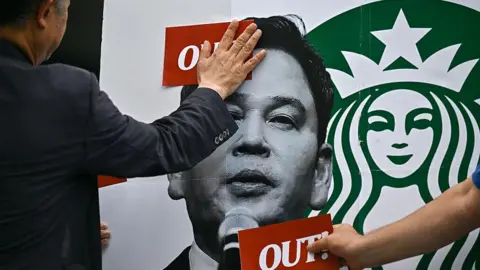
Starbucks' recent change of CEO, marked by the appointment of Brian Niccol, is one example where expectations are exceedingly high. Following a slump in sales influenced by various market challenges, including a crowded competitive landscape and geopolitical tensions, the company directed its hopes towards Niccol's leadership to steer the brand back on course. His impressive compensation package of over $100 million, coupled with perks like a private jet for commutes, underscores the board’s optimism regarding his potential to revive Starbucks' performance; the company's stock even surged 24.5% on the announcement of his appointment.
The effectiveness of a CEO extends beyond immediate performance metrics—their ability to foster organizational culture and set strategic direction is crucial. Entrepreneur Marcia Kilgore stresses the importance of a capable leader who can harmonize different functions within a company, minimizing resource waste while maximizing productivity. This capacity for clear organization and prioritization was pivotal for Lafley when he took the reins at P&G after a turbulent restructuring period that led to his predecessor's resignation.
Lafley emphasizes the importance of communicating a cohesive vision to employees, relaying that during his tenure, he traveled extensively to engage directly with the workforce. Nike's new CEO Elliott Hill similarly aims to inspire his team amidst challenges, emphasizing confidence in his colleagues as a way to rebuild momentum after years of declining sales.
Alisa Cohn, an executive coach with a portfolio boasting top companies like Google and Johnson & Johnson, argues that while a clear vision is critical, the mental fortitude and adaptability of a CEO are equally paramount. She notes that confidence, coupled with an ability to pivot in response to evolving circumstances, is essential for effective leadership—characteristics that Cohn believes cannot always be cultivated through formal training.
The substantial compensation packages awarded to CEOs also reflect their critical role but have come under scrutiny. Last year, for instance, Hock Tan of Broadcom led the S&P 500's earnings with $162 million, a stark contrast to average worker salaries. Critics, including Sarah Anderson from the Institute for Policy Studies, argue that such vast disparities in pay not only threaten equitable workplace dynamics but also stem from an outdated belief in the singular impact of CEOs on corporate performance.
Lafley concurs that the pay gap should be addressed, advocating for a compensation model that ties salary more closely to performance incentives rather than fixed high salaries. Ultimately, he likens a successful CEO's role to that of a sports coach—a leader's worth is rendered through their ability to empower their team and cultivate an environment in which collaborative success can flourish.
As the corporate landscape continues to evolve, the discussion surrounding the implications of leadership changes remains crucial, reflecting broader societal concerns regarding equity and effectiveness within major enterprises.
Starbucks' recent change of CEO, marked by the appointment of Brian Niccol, is one example where expectations are exceedingly high. Following a slump in sales influenced by various market challenges, including a crowded competitive landscape and geopolitical tensions, the company directed its hopes towards Niccol's leadership to steer the brand back on course. His impressive compensation package of over $100 million, coupled with perks like a private jet for commutes, underscores the board’s optimism regarding his potential to revive Starbucks' performance; the company's stock even surged 24.5% on the announcement of his appointment.
The effectiveness of a CEO extends beyond immediate performance metrics—their ability to foster organizational culture and set strategic direction is crucial. Entrepreneur Marcia Kilgore stresses the importance of a capable leader who can harmonize different functions within a company, minimizing resource waste while maximizing productivity. This capacity for clear organization and prioritization was pivotal for Lafley when he took the reins at P&G after a turbulent restructuring period that led to his predecessor's resignation.
Lafley emphasizes the importance of communicating a cohesive vision to employees, relaying that during his tenure, he traveled extensively to engage directly with the workforce. Nike's new CEO Elliott Hill similarly aims to inspire his team amidst challenges, emphasizing confidence in his colleagues as a way to rebuild momentum after years of declining sales.
Alisa Cohn, an executive coach with a portfolio boasting top companies like Google and Johnson & Johnson, argues that while a clear vision is critical, the mental fortitude and adaptability of a CEO are equally paramount. She notes that confidence, coupled with an ability to pivot in response to evolving circumstances, is essential for effective leadership—characteristics that Cohn believes cannot always be cultivated through formal training.
The substantial compensation packages awarded to CEOs also reflect their critical role but have come under scrutiny. Last year, for instance, Hock Tan of Broadcom led the S&P 500's earnings with $162 million, a stark contrast to average worker salaries. Critics, including Sarah Anderson from the Institute for Policy Studies, argue that such vast disparities in pay not only threaten equitable workplace dynamics but also stem from an outdated belief in the singular impact of CEOs on corporate performance.
Lafley concurs that the pay gap should be addressed, advocating for a compensation model that ties salary more closely to performance incentives rather than fixed high salaries. Ultimately, he likens a successful CEO's role to that of a sports coach—a leader's worth is rendered through their ability to empower their team and cultivate an environment in which collaborative success can flourish.
As the corporate landscape continues to evolve, the discussion surrounding the implications of leadership changes remains crucial, reflecting broader societal concerns regarding equity and effectiveness within major enterprises.