In brief
In the besieged city of El-Fasher, local residents share their heartbreaking stories and daily struggles as they navigate relentless bombardments, grief, and famine amidst Sudan’s civil war. With a lack of communication due to the siege, the BBC delivers mobile phones to individuals on the ground, uncovering a grim picture of survival, loss, and resilience.
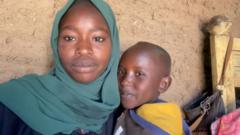
In a city battered by war, the sound of shelling and gunfire is a daily backdrop for the citizens of El-Fasher, Sudan, as the civil conflict rages on. Through the efforts of the BBC World Service, individuals trapped in the crossfire have been supplied with mobile phones, allowing them to share their harrowing experiences. One such survivor, Hafiza, recounts the tragic loss of her mother to artillery fire while she worked in the market. With the death of her parent, the 21-year-old finds herself suddenly thrust into a caretaker role, responsible for her five-year-old brother and two teenage sisters, and navigating the challenges of survival in a war-torn city.El-Fasher, encircled by the paramilitary Rapid Support Forces (RSF) for nearly a year, has been cut off from the outside world, complicating relief efforts. Hafiza's only source of support comes from her voluntary work, where she distributes food and blankets to those displaced by the escalating violence. “I spend my time crying alone at home,” she admits in one of her recorded messages. The situation is dire; as the war between the military and RSF continues, the city has become synonymous with suffering, war crimes, and an escalating humanitarian crisis.Mostafa, another resident equipped with a BBC phone, echoes Hafiza’s sentiments as he documents the relentless attacks on civilians. His own home has been devastated by shelling, and he reports widespread looting and a lack of clean water, forcing families to resort to drinking contaminated sources. Mostafa courageously volunteers at shelters for the displaced, but he acknowledges that “there is no safe place in El-Fasher.” Manahel, a 26-year-old and recent university graduate, shares a similar grim story, detailing the loss of her father, who stayed behind to protect belongings entrusted to him by neighbors. She describes the trauma of relocating with her mother and siblings as they flee from the front lines, ultimately contributing to community kitchens to alleviate the hunger plaguing many displaced families. But the fear of violence looms larger—both Hafiza and Manahel dread the fate that could await them if the RSF gains control, invoking memories of reported atrocities in other besieged cities.Reports indicate that nearly 2,000 people have been killed or injured in El-Fasher since the siege began, as humanitarian organizations warn of rising famine levels, exacerbated by soaring food prices. While families face deprivation and violence daily, the eerie silence of nighttime, marked by the absence of electricity, amplifies their fear of detection by drones.The RSF denies accusations of ethnic cleansing and war crimes, framing their narrative around a recent shift toward purported stability in the region. However, amidst the propaganda, the stark reality for refugees tells a different story—over 10 million people remain displaced, symptomatic of a national crisis.As organization efforts yield little respite, those like Hafiza, Mostafa, and Manahel choose to evacuate El-Fasher in search of safety. Their uncertain future echoes the grim unease felt by countless others, as they abandon the city that has become a haunting reminder of lost lives and dreams. "We are leaving without knowing our fate," Manahel reflects, capturing the poignant uncertainty overshadowing the war in Sudan—a haunting question marking the end of their journey, “Will we ever return?”