
In brief
The accidental discovery was made by archaeologist Luke Auld-Thomas while analyzing Lidar data, leading to the identification of extensive architectural features and reshaping our understanding of Mayan urban life ahead of climate change impacts.
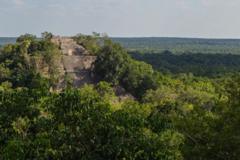
Archaeologists have revealed a monumental discovery in the jungles of southeastern Mexico, uncovering the ruins of a vast ancient Mayan city named Valeriana. The site, which is speculated to have flourished between 750 and 850 AD and housed a population of 30,000 to 50,000, was located in the state of Campeche and features structures including pyramids, sports fields, and extensive causeways that connect various districts.The discovery, described as "by accident," came about when Luke Auld-Thomas, a PhD student at Tulane University, stumbled upon Lidar data during a casual online search. Lidar, or Light Detection and Ranging, is a remote sensing technology that employs laser beams to penetrate thick vegetation and map the subsurface structures based on the return time of the reflected signals. Upon analyzing the data, Auld-Thomas discovered patterns indicative of a sophisticated and sprawling urban center that had evaded detection.Valeriana is now recognized as potentially the second-largest Maya site after Calakmul, which is located roughly 100 kilometers away. Its sheer size, comparable to Edinburgh, alongside its architectural complexity, challenges the long-standing belief in Western thought that tropical regions were devoid of thriving civilizations during pre-Columbian times. According to Professor Marcello Canuto, a co-author of the study, this discovery reaffirms the sophisticated nature of ancient cultures in lowland tropical areas.Although the exact reasons for the city's decline remain speculative, climate change is posited as a significant factor in its abandonment. Archaeologists found two major archaeological centers within Valeriana, linked by residential zones and causeways, and an array of plazas with temple pyramids, where Mayans would have conducted religious activities. Moreover, researchers identified a central court used for ancient ball games, as well as reservoirs suggesting advanced water management strategies.Furthermore, Professor Elizabeth Graham from University College London emphasized how this discovery supports theories that ancient Maya civilization was not merely banded in isolated villages, but rather thrived in structured, populous cities. The implications of this study indicate that the region was densely inhabited even before the severe climatic shifts began around the year 800 AD, leading to increased socio-political tensions and possibly contributing to the civilization's eventual collapse.The advent of Lidar technology has transformed archaeological surveys, especially in densely vegetated areas, allowing for comprehensive mapping that would take individual footsteps over a century to accomplish. As more Mayan cities come to light thanks to this method, archaeologists face the challenge of managing and studying these newfound sites, knowing that many more are likely hidden beneath the thriving jungle.This groundbreaking research has been documented in the academic journal, Antiquity, and it sets a precedent for further exploration into the Mayan legacy and the landscape of ancient urbanism in Mesoamerica. As new sites emerge, the quest to understand the full scope of Mayan civilization and its impacts continues to unfold.
